If you are looking for Jira Service Management alternatives, you are likely hitting one of three walls: pricing at scale, the learning curve for non-Atlassian users, or the limits of Marketplace add-ons. This guide ranks eight credible alternatives — and adds the column most lists skip: how easy each is to migrate into.
Why teams leave Jira Service Management
Jira Service Management is a capable platform. It's also one that teams frequently outgrow, overpay for, or simply find too painful to operate.
The most common breaking points:
The learning curve is steep and stays steep. Configuring IT Asset Manager requires manually building object schemas, custom attributes, relationships, and automations. You need a CMDB specialist to run it well. That's a major dependency to take on.
The interface punishes non-technical users. Navigation assumes prior Jira experience. Customization leans on AQL, Atlassian's proprietary query language. New team members need time to get productive — often weeks.
Third-party integrations require workarounds. Jira connects natively to the Atlassian ecosystem: Confluence, Bitbucket, and Trello. Outside of that, integrating with G Suite or Microsoft 365 typically means bridge apps or custom automation scripts.
None of these are dealbreakers for every team. But if you're hitting two or more, it's worth looking at what else is out there.
How we evaluated alternatives
We ranked alternatives to Jira ITSM across five criteria:
- Out-of-the-box usability. How long until an average IT admin becomes productive? Tools with drag-and-drop workflow builders and clean UIs score higher than those that require configuration expertise.
- ITSM feature depth. Incident management, change management, asset tracking, CMDB, SLA management — we looked at which tools cover the full ITIL stack versus which ones cherry-pick.
- Pricing honesty and scalability. We favored tools with published pricing and predictable per-agent costs. Tools with quote-only pricing were evaluated using publicly available information.
- Integration availability. Native integrations with common enterprise tools, including Microsoft 365, G Suite, Slack, and monitoring platforms, matter more than Atlassian-specific depth.
- Switching cost. This includes help desk migration, API availability for export, and the extent to which institutional knowledge must transfer to the new ITSM platform. A tool 10% better but requiring six months of migration work is rarely worth it.
We excluded tools without ITSM-specific workflows, a ticketing system, or a meaningful track record of enterprise deployment.
8 Jira Service Management Alternatives Worth Checking out
Zendesk — best for customer-facing IT
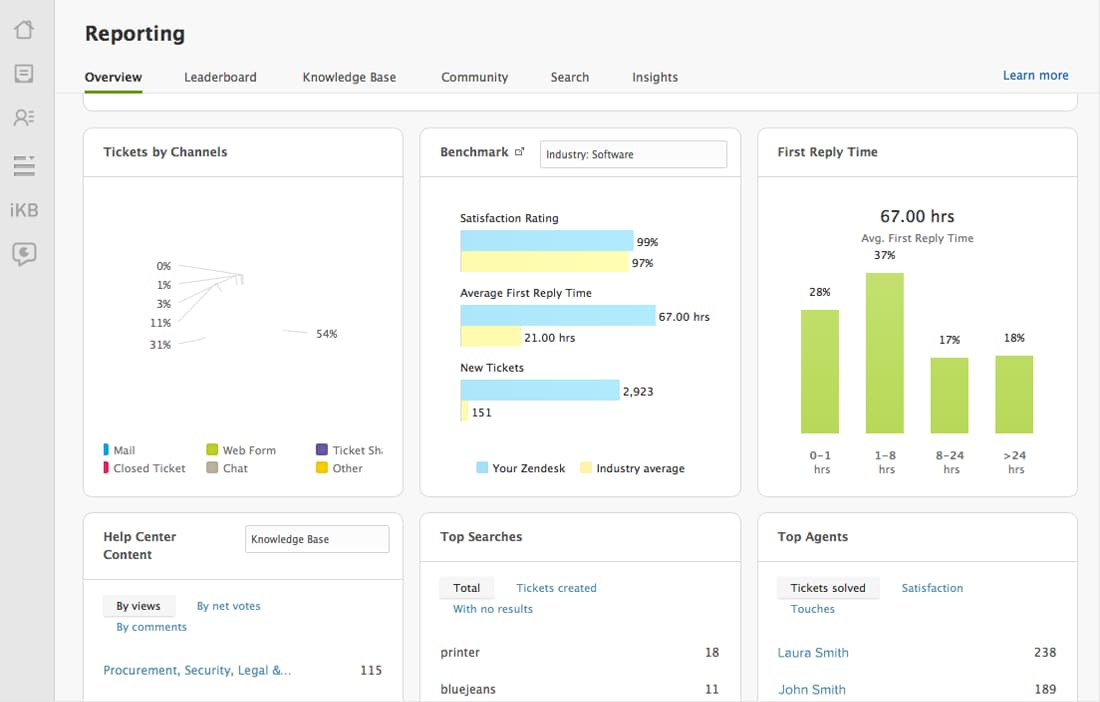
Zendesk started as a customer support platform, and that heritage shows — in a good way. If your IT service desk serves external customers or end users who expect consumer-grade support experiences, Zendesk's omnichannel approach is hard to match for other Jira Service Management alternatives.
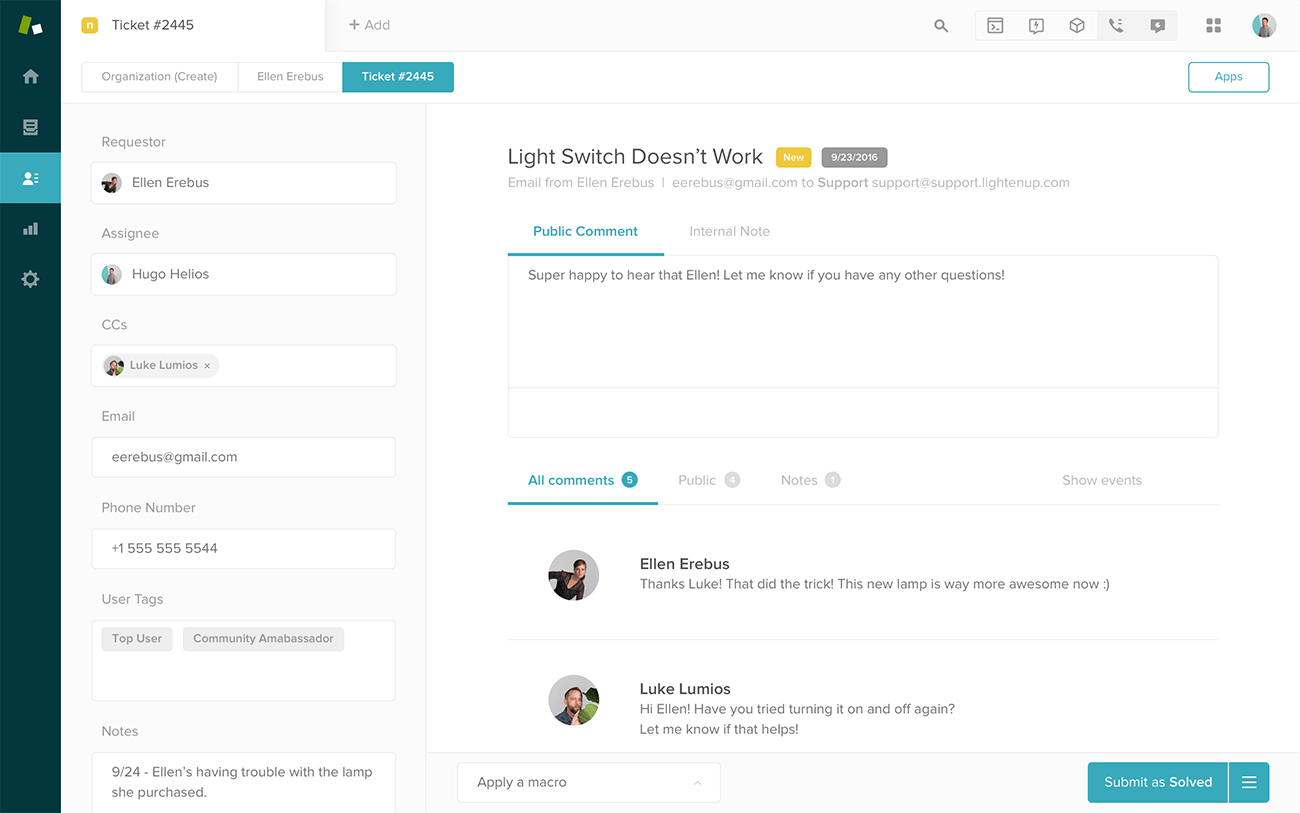
What it does well: Omnichannel ticketing across email, chat, phone, and social. SLA management, custom views, multilingual and multi-brand support, strong agent analytics, and over 100 third-party integrations out of the box.
Source: Zendesk
Unique features:
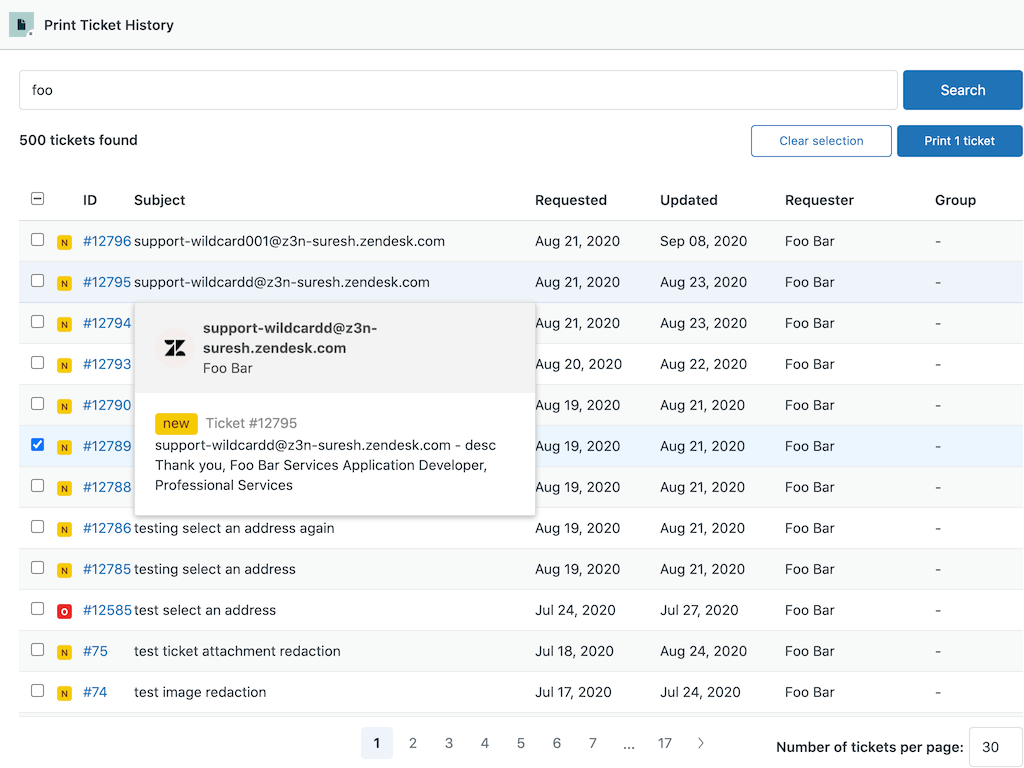
- Print management
- Net Promoter Score
- Active Directory integration
- Group management
- Progressive dialer
Source: Zendesk
Pros:
- Flexible ticketing system
- Over 100 integrations with third-party tools
- Advanced agent performance tracking
- Chat & messaging extensibility
- APIs for custom ticket forms, ticket data migration, creating users, and searching
Cons:
- No single queue for all channels
- Slow customer support from the vendor
- Some help desk features are available only as add-ons
Source: Zendesk
Pricing: Three annually-billed plans. Transparent pricing is published on the site.
Bottom line: Strong choice when the service desk is a customer touchpoint, not just an internal IT function. If you're purely internal IT, the customer-centric feature set may feel like excess weight.
Zoho Desk — best for SMB IT
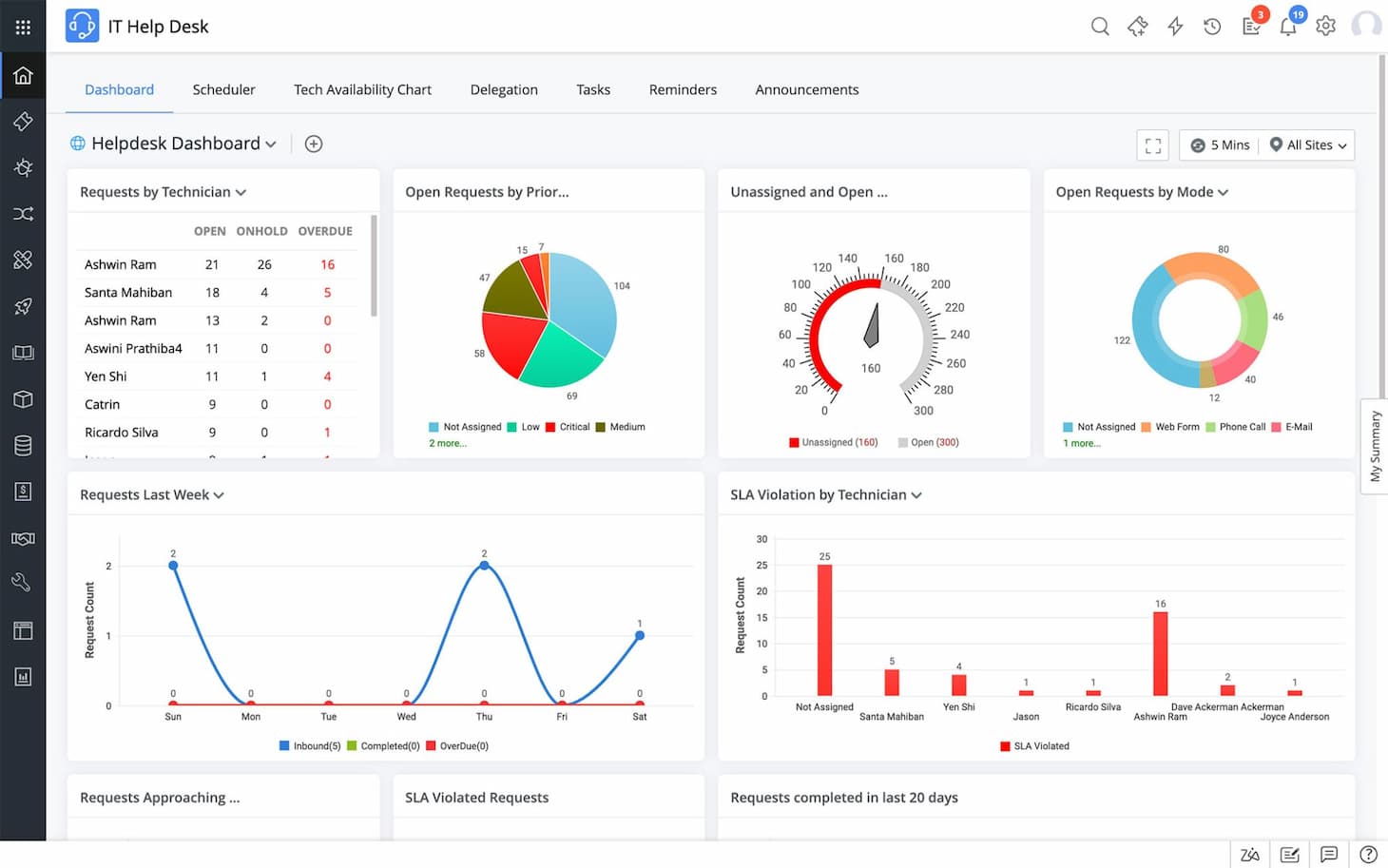
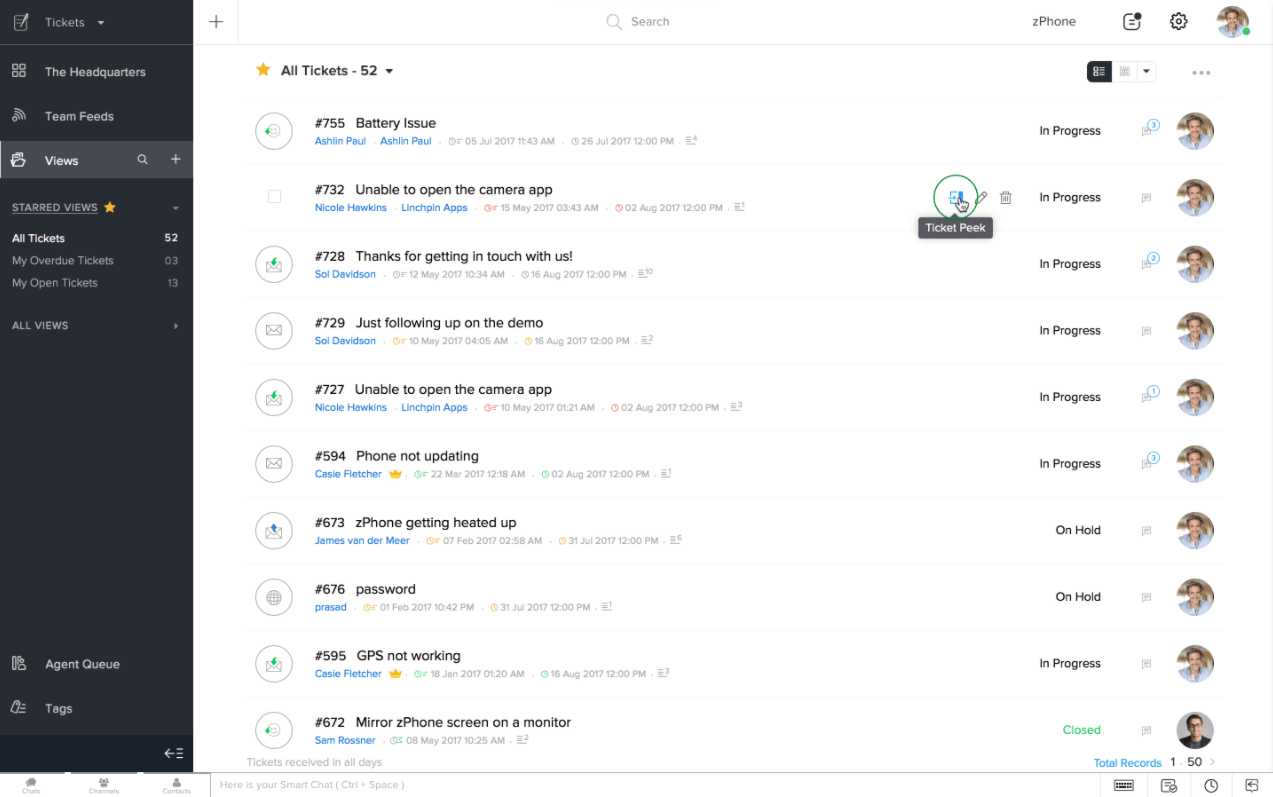
Zoho Desk offers a wide feature set at a price point that makes sense for smaller teams. It's one of the few alternatives to Jira ITSM with a genuinely usable free tier, and the paid plans don't require a jump to enterprise pricing to access meaningful functionality.
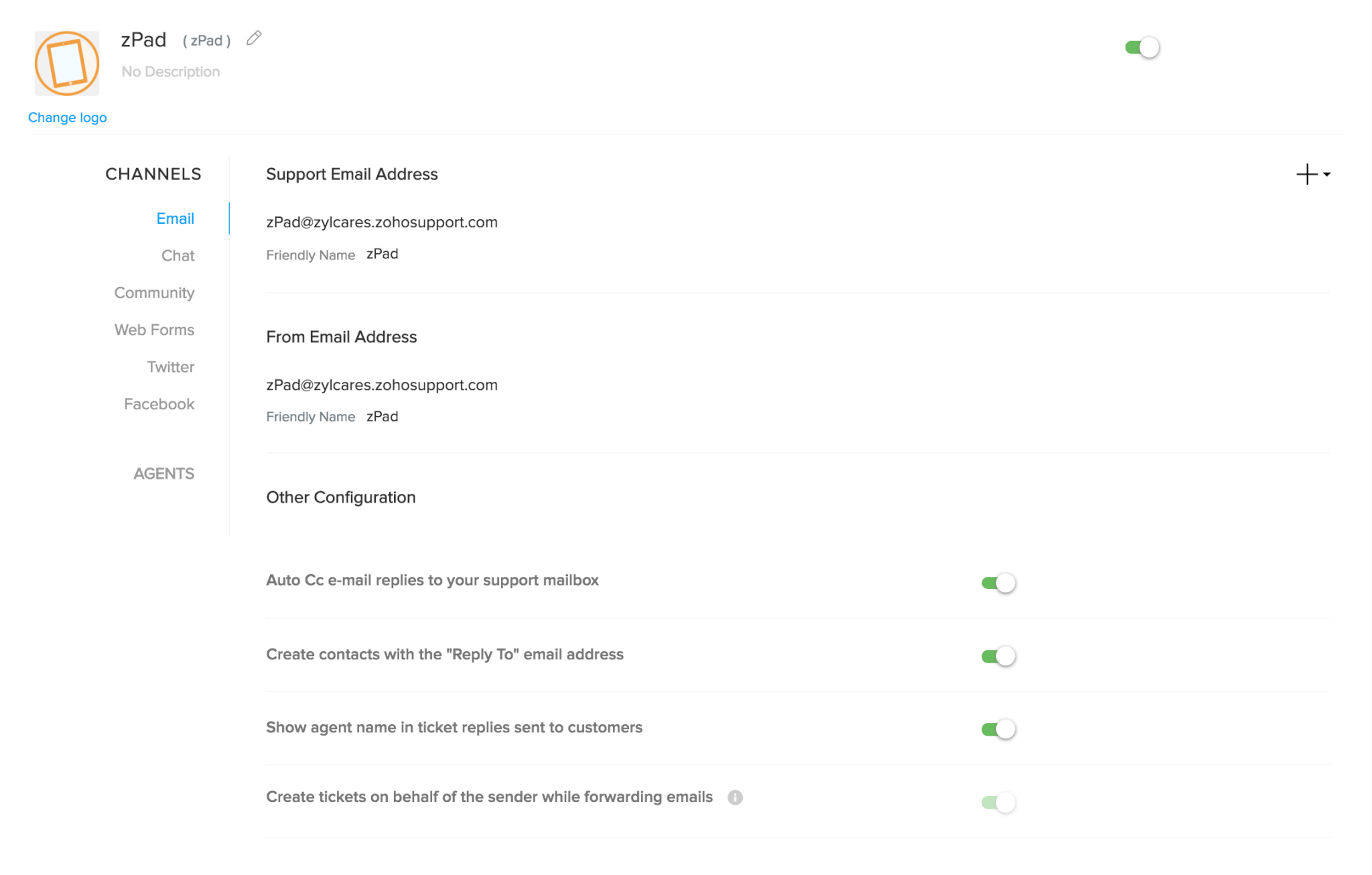
What it does well: Multi-channel support, workflow automation, SLA management, solid mobile app, and multi-department and multi-brand features that punch above the price point. Setup is straightforward.
Source: Zoho Desk
Unique features:
- Multi-department support
- Multi-brand help center
- Document management
- Quotes/estimates
- Performance control
Source: Zoho
Pros:
- Simple set-up
- Robust mobile app
- Agent performance & productivity reporting
- Extensions from scratch & connections to other channels using API
Cons:
- Some advanced features are available only at a higher price or as add-ons
- It may be complex to use for beginners
Source: Zoho
Pricing: Free plan available. Paid plans are offered monthly or annually.
Bottom line: The best value proposition in this list for teams under 50 agents that don't need enterprise-grade complexity.
ServiceNow — best for enterprise scale
Among other Jira Service Management alternatives, ServiceNow is the enterprise ITSM standard for a reason. It handles complexity that would break most other platforms — multi-department workflows, custom application deployment, deep CMDB integration, and AI-powered service catalogs — across organizations with thousands of users.
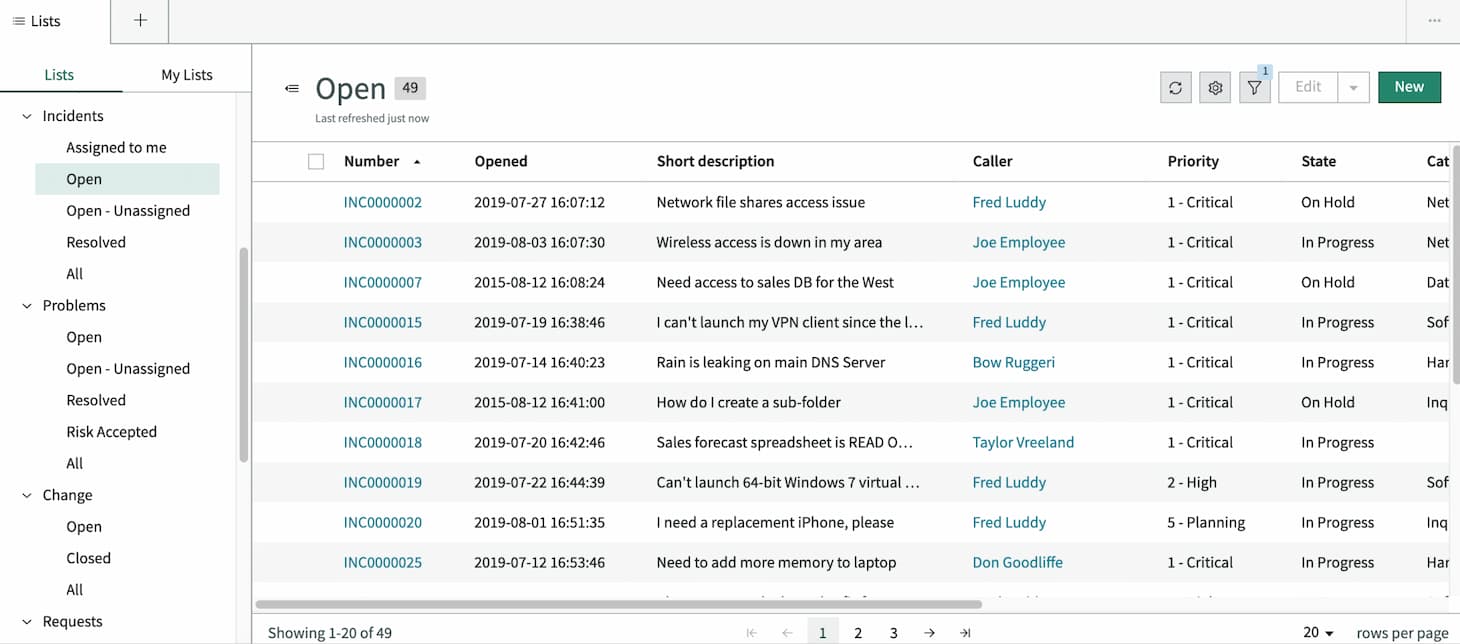
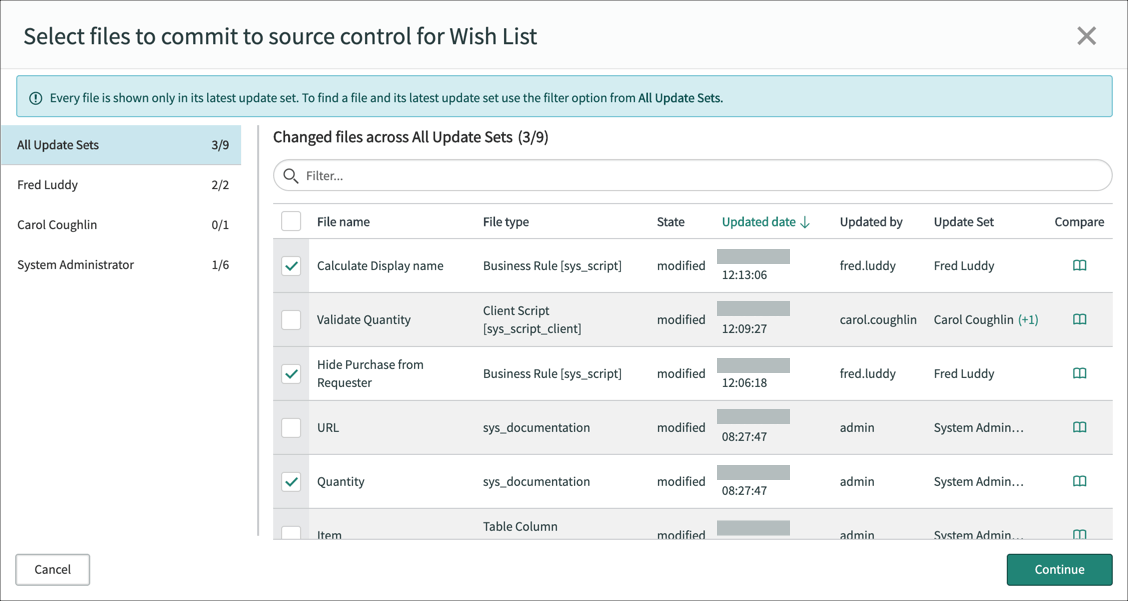
What it does well: Pre-built extension points let you expand functionality without modifying core application code. Six API categories support mobile and desktop integrations. Source control is built in.
Source: ServiceNow
Unique features:
- Source control
- Real-time mobile dashboards
- AI-powered self-service portal
- Custom applications deployment
- Contract management

Source: ServiceNow
Pros:
- 6 API categories for mobile and desktop
- Pre-existing extension points allow functionality extension without changing the original application code
- Allows for complete project management
Cons:
- The interface may be confusing for new users
- No option for managing devices
- Lacks capacity management
Source: ServiceNow
Pricing: Custom quotes only. A free developer instance is available for application development.
Bottom line: If you're running IT for a large enterprise and need a platform that can grow with you indefinitely, ServiceNow is the benchmark. For everyone else, it's probably overkill.
SolarWinds Service Desk — best for asset management
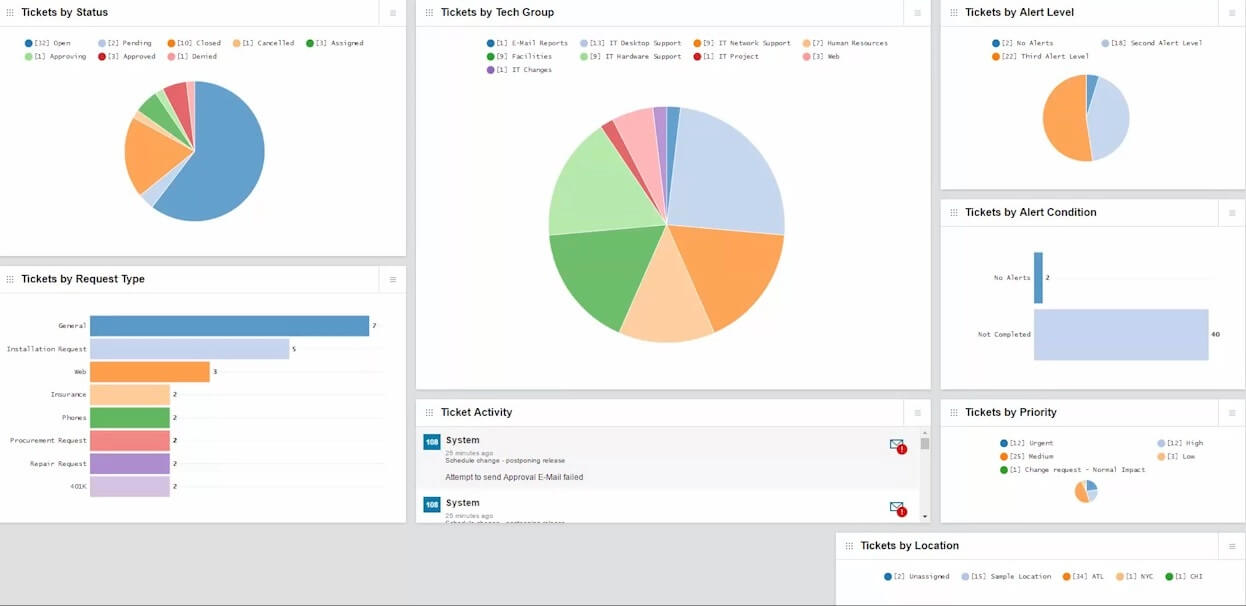
SolarWinds Service Desk is built for IT teams where asset management is as important as ticket management. The CMDB automatically maps dependencies between configuration items — you're not building that relationship graph by hand.
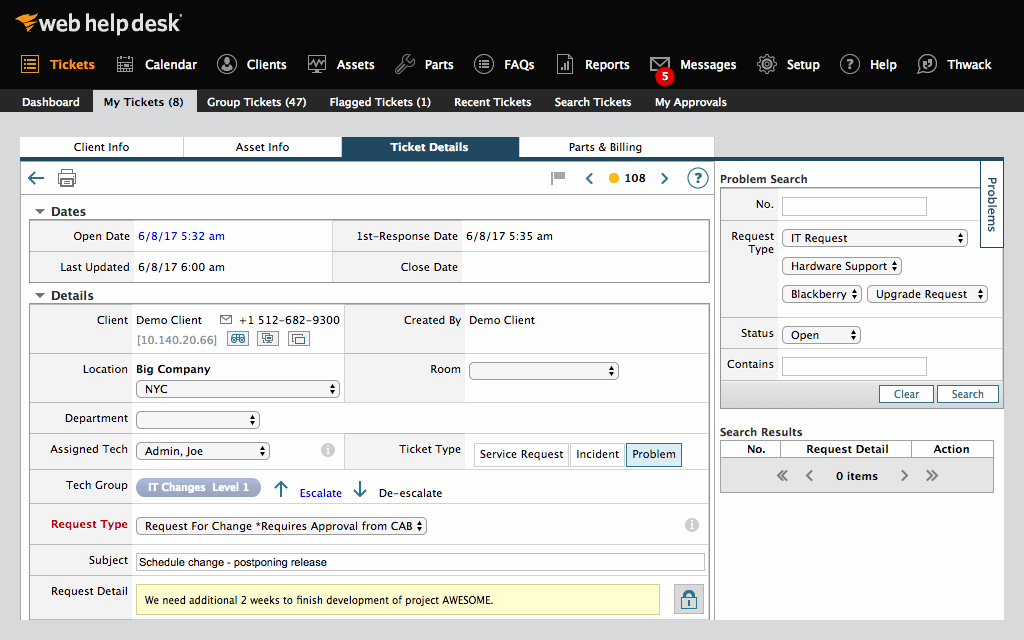
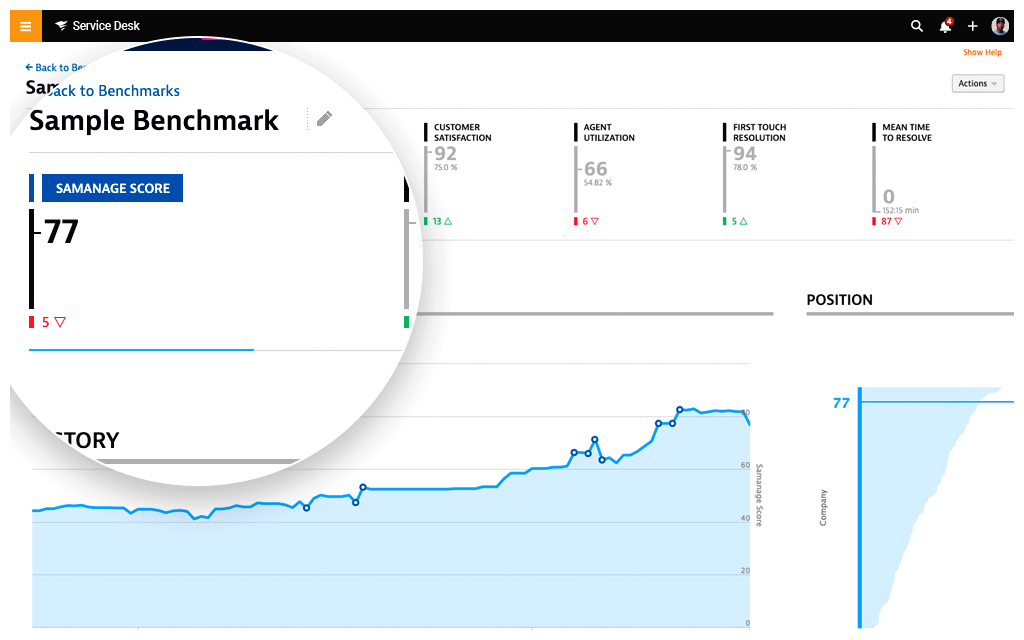
What it does well: Automated asset lifecycle management, configuration dependency visualization, service desk benchmarking, SLA management, and HIPAA/HITECH support for regulated environments. Hosted on AWS.
Source: SolarWinds Service Desk
Unique features:
- Service desk benchmarking against industry standards
- Data mapping
- Custom dashboards
- Contact database
Source: SolarWinds Service Desk
Pros:
- Incidents filtering
- Multi-tenant database enhances collaboration between internal service providers
- Customizable AI-powered knowledge base
- API for dozens of integrations
Cons:
- Some functions are hard to find
- Learning curve may be too steep for some users
- The reporting feature is mediocre
Source: SolarWinds Service Desk
Pricing: Per-technician monthly pricing, available for unlimited users on all plans. Published on the SolarWinds site.
Bottom line: If your team spends as much time managing hardware and software assets as it does managing tickets, SolarWinds Service Desk handles both without compromise.
Freshservice — best for IT teams that want simpler ITSM
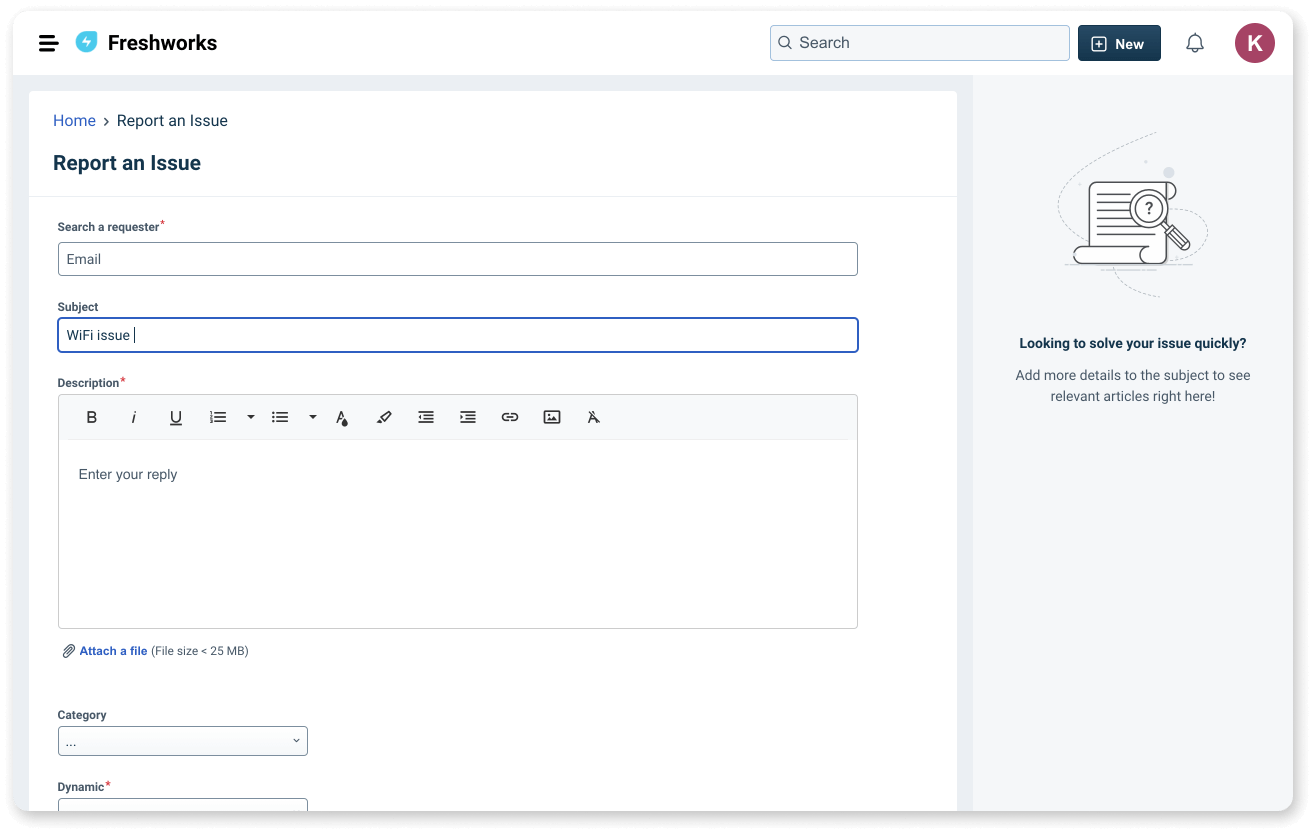
Freshservice hits the sweet spot most Jira refugees are looking for: a full ITIL-aligned feature set with a setup process that doesn't require a specialist. Teams are typically live in days, not weeks.
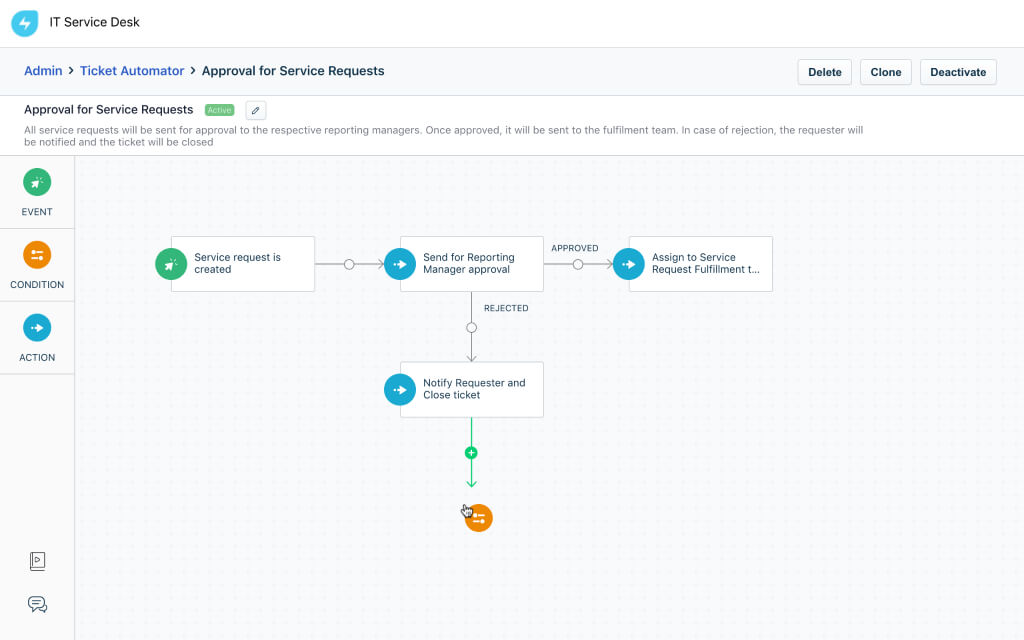
What it does well: Full ITIL-aligned feature set — automated ticketing, change and release management, asset lifecycle tracking, AI-powered analytics — with a self-service portal that's configurable without touching code.
Source: Freshservice
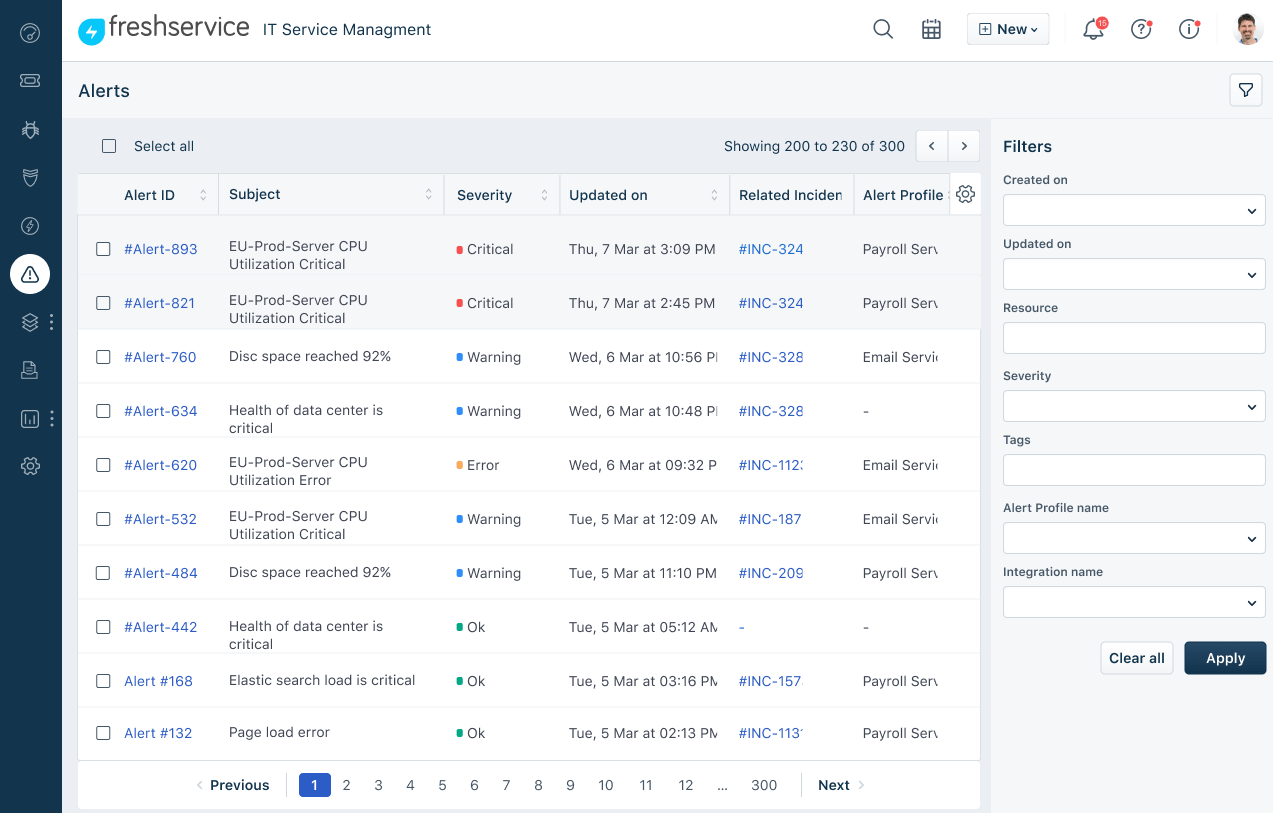
Unique features:
- Contract management
- Asset lifecycle management
- Document storage
- AI-powered alert management
Source: Freshservice
Pros:
- User-friendly interface
- Easy set-up & quick onboarding
- Customizable forms and workflows
- REST category APIs
Cons:
- Reporting is quite limited
- Freddy AI lacks improvement
- The mobile app is not as intuitive as the desktop
Source: Freshservice
Pricing: Multiple tiers billed monthly or annually. Published pricing available on the Freshworks site; scales per agent.
Bottom line: If your main frustration with Jira is complexity, Freshservice solves it directly.
ManageEngine ServiceDesk Plus — best for on-premises deployment
Most of this list is cloud-native. ManageEngine Service Desk Plus is the exception — it's one of the few free alternatives to Jira Service Management with a credible on-premises deployment option. For organizations with data residency requirements, air-gapped environments, or compliance mandates that rule out SaaS, that matters.
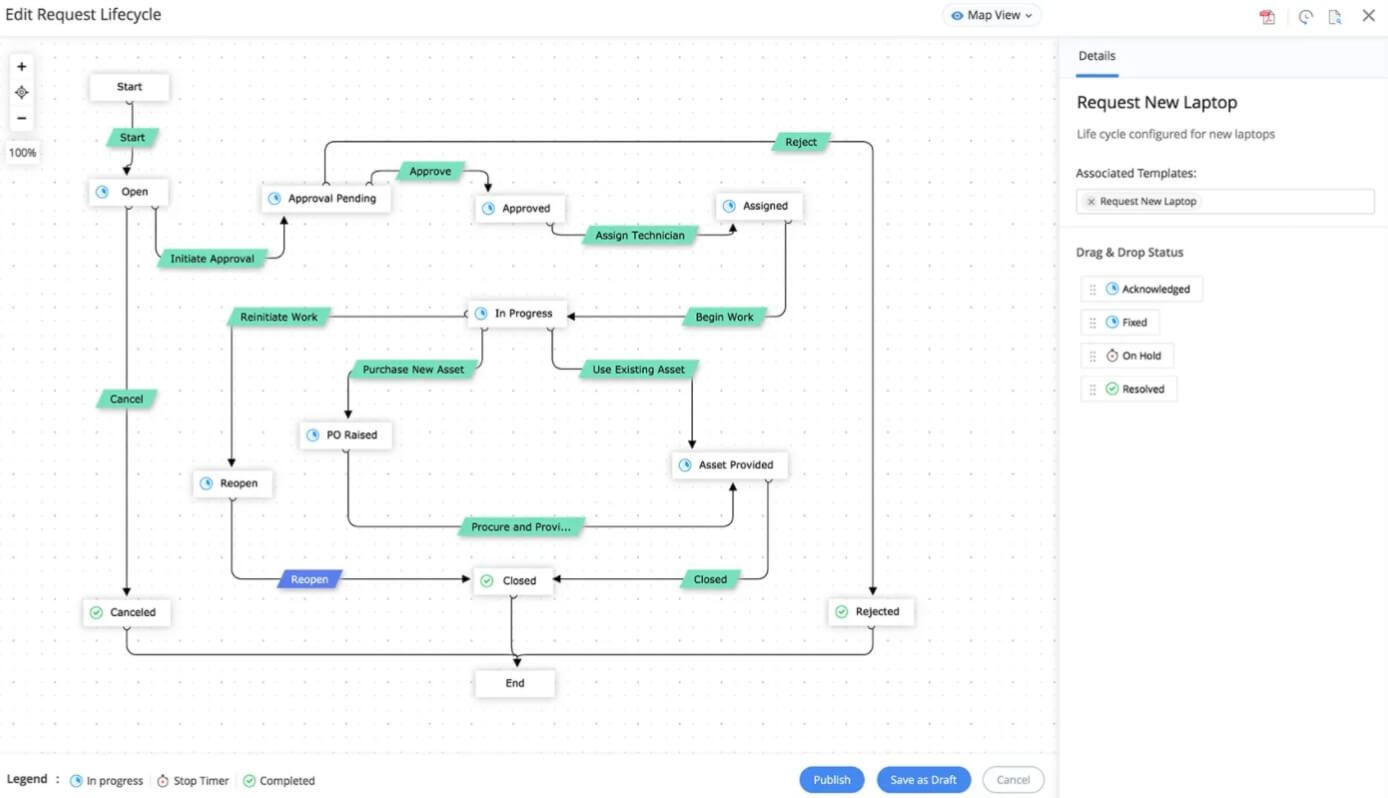
What it does well: Full ITIL-ready feature set — incident, problem, change, and release management — plus asset auto-discovery, service catalog, CMDB, and support for up to 200 technicians. Installation is straightforward relative to the feature depth.
Source: ManageEngine Service Desk
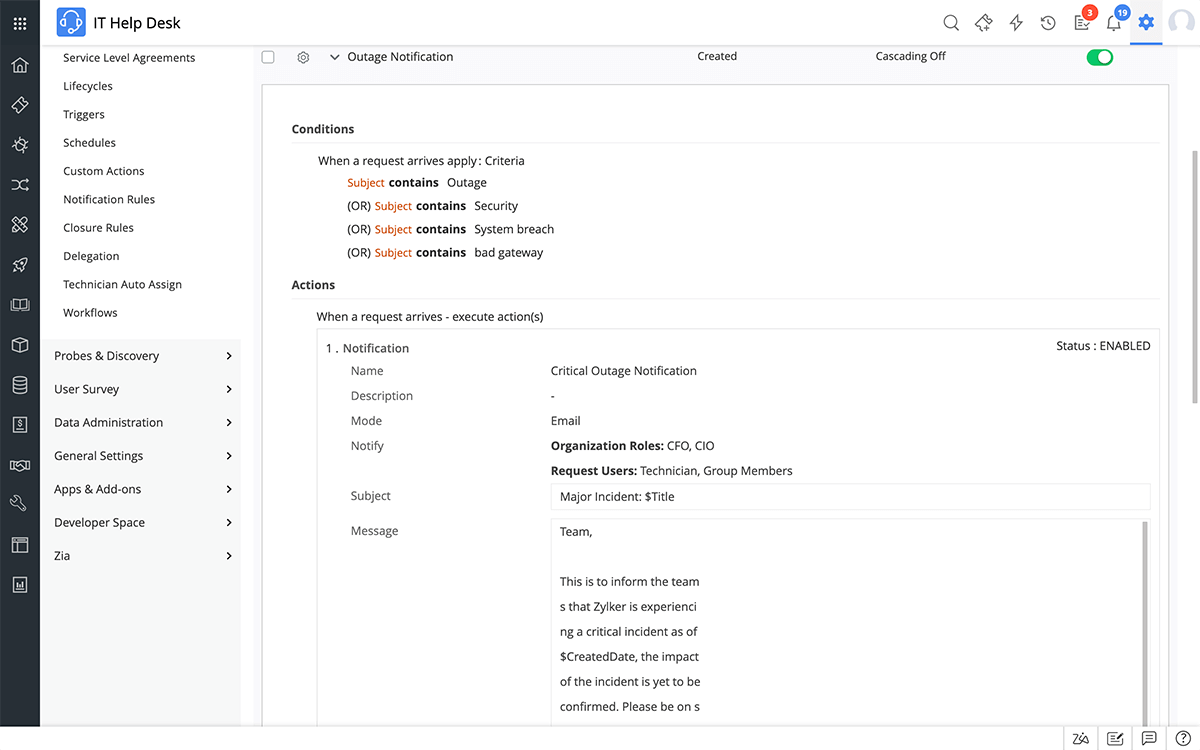
Unique features:
- Availability management
- Document storage
- Recurring issues tracking
- Asset lifecycle management
- Workspace management
Source: ManageEngine Service Desk
Pros:
- Easy installation
- ITIL-ready functionalities
- Asset auto-discovery
- Service catalog included
Cons:
- Needs frequent updates
- Workflow management is medium-level
- Customer support is unsatisfactory
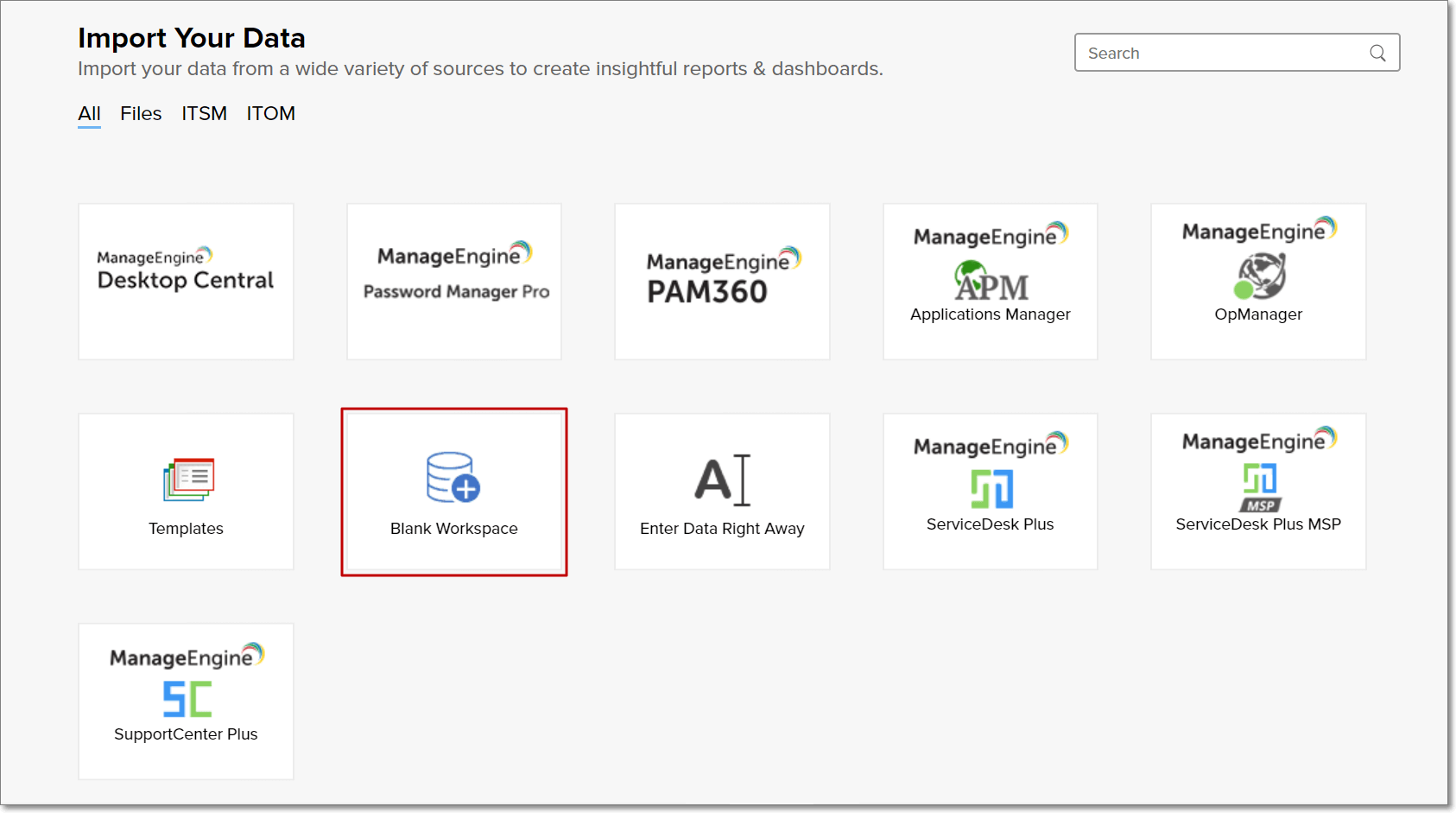
Source: ManageEngine Service Desk
Pricing: Three tiers, available in English and multilingual versions, billed monthly or annually.
Bottom line: The default choice for on-premises ITSM. If cloud deployment is on the table, you'll likely find better workflow flexibility elsewhere at similar price points.
Halo ITSM — best for ITIL-heavy environments
Halo ITSM is built specifically for teams that take ITIL seriously. If your organization follows ITIL 4 closely and needs a platform that maps to that framework without extensive customization, HaloITSM is worth prioritizing.
What it does well: Comprehensive ITIL process coverage — incident, problem, change, release, and service request management — with workflows built around ITIL best practices from the start. Configurable without developer involvement.
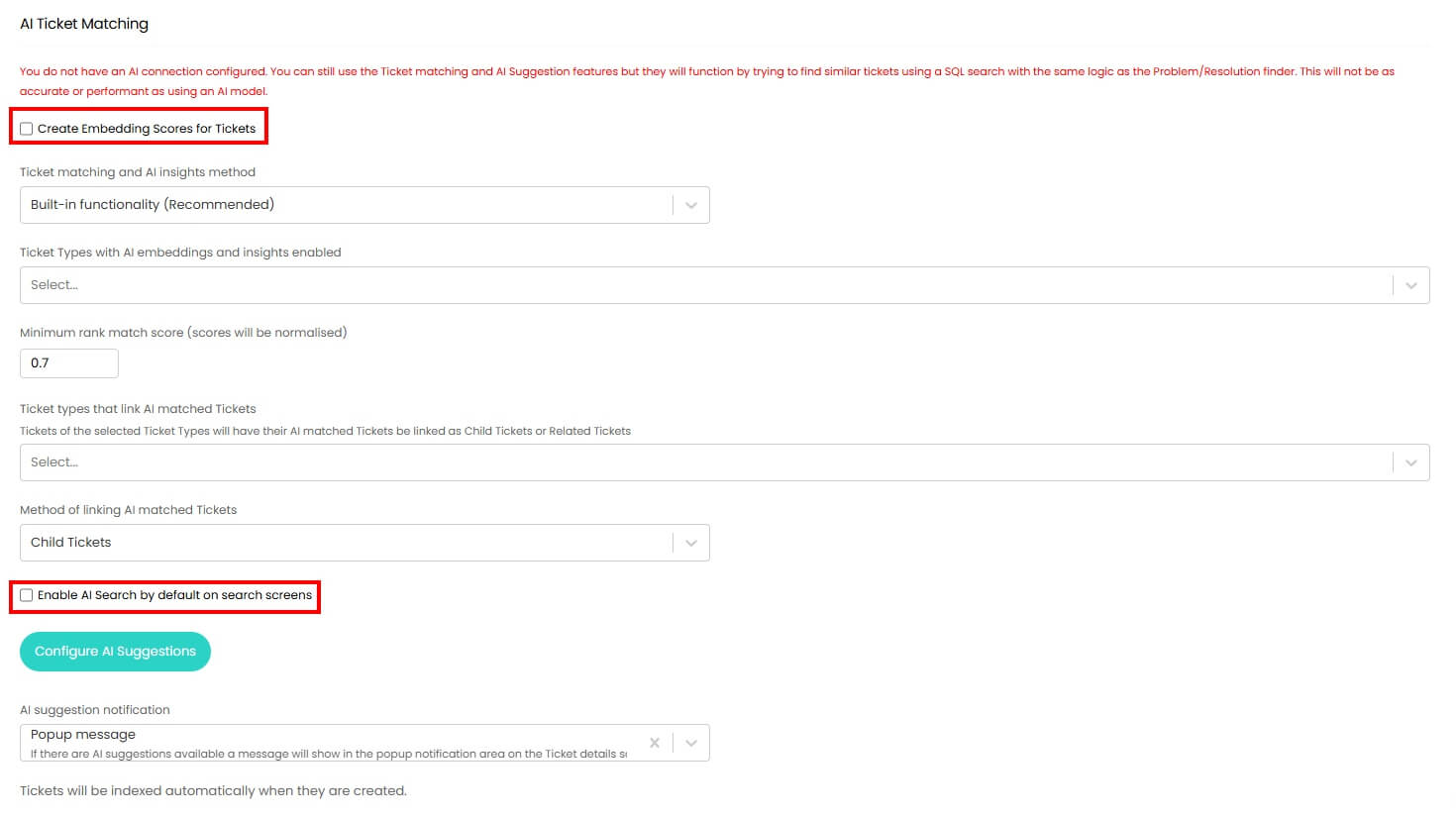
Source: Halo
Unique features:
- Full ITIL 4 process alignment out of the box
- Configurable without developer involvement
- Flexible deployment (cloud or on-premises)
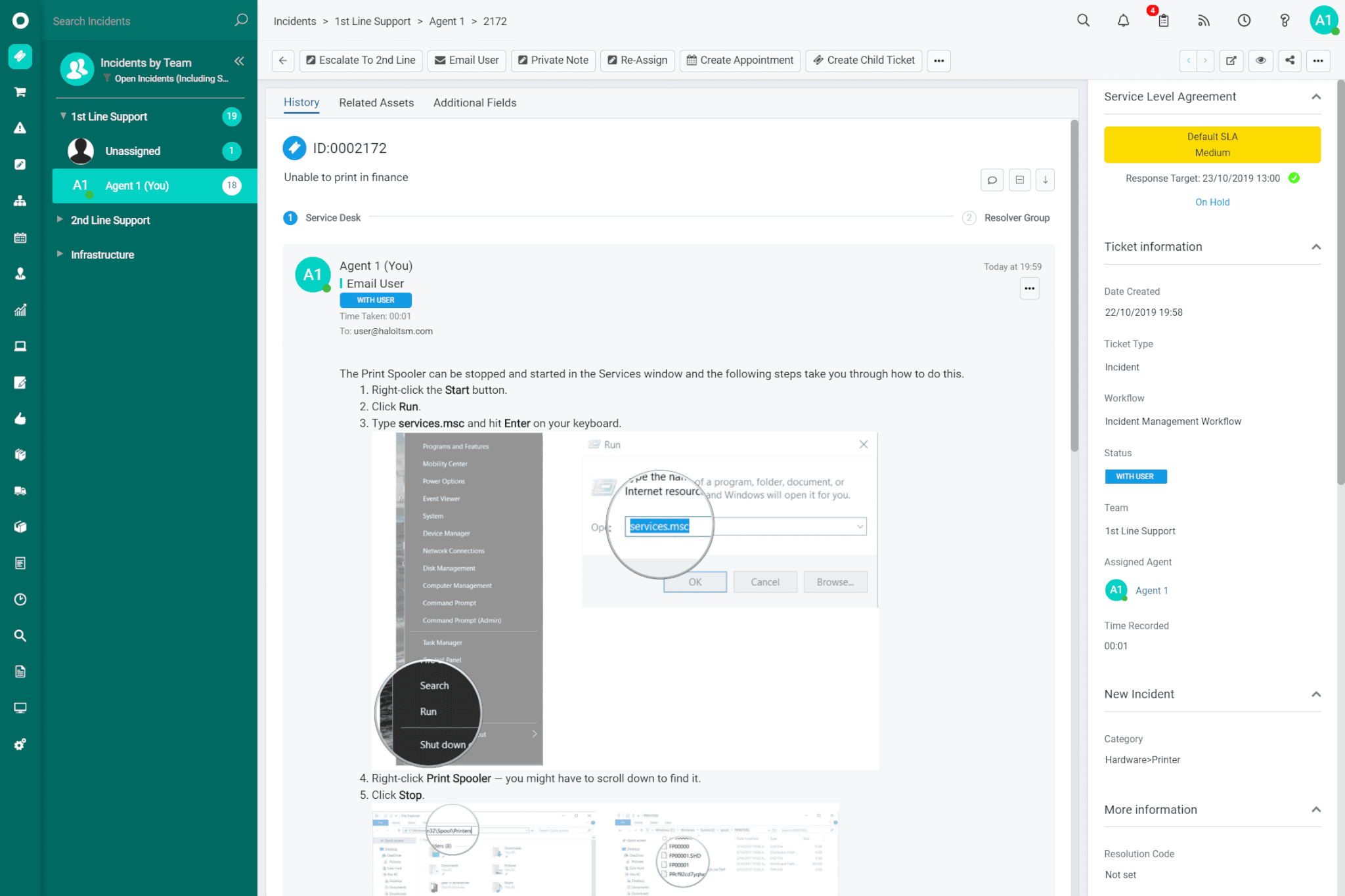
Source: Halo
Pros:
- Strong ITIL compliance across all modules
- Competitive mid-market pricing
- Clean, modern interface
Cons:
- A smaller vendor footprint means fewer native integrations
- Smaller peer community than enterprise competitors
- Less name recognition can complicate budget approvals
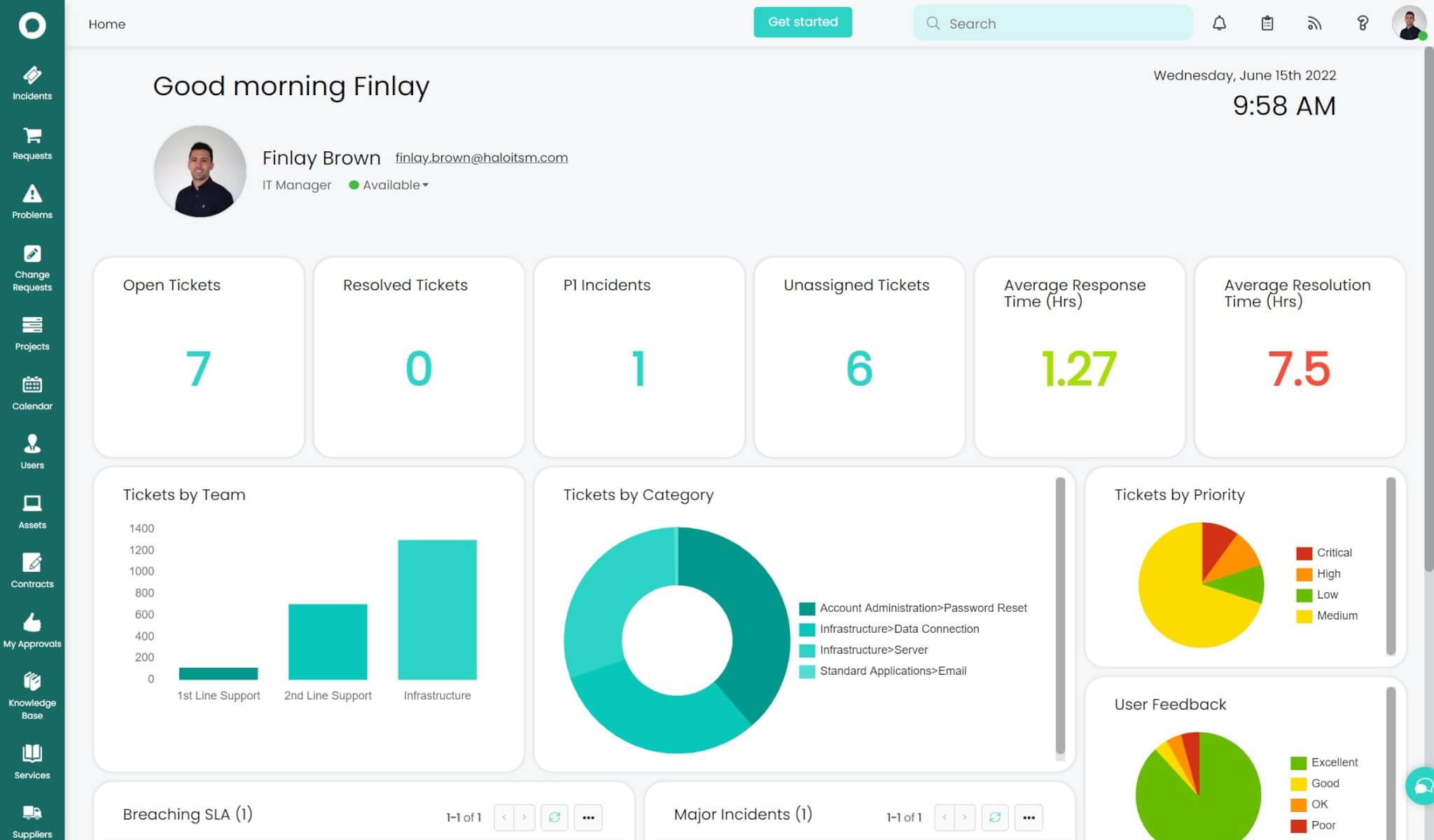
Source: Halo
Pricing: Contact vendor for pricing. Often cited as competitive with mid-market tools.
Bottom line: If ITIL compliance is a hard requirement and you find Jira's ITIL implementation underwhelming, HaloITSM deserves a close look.
Spiceworks — best free option
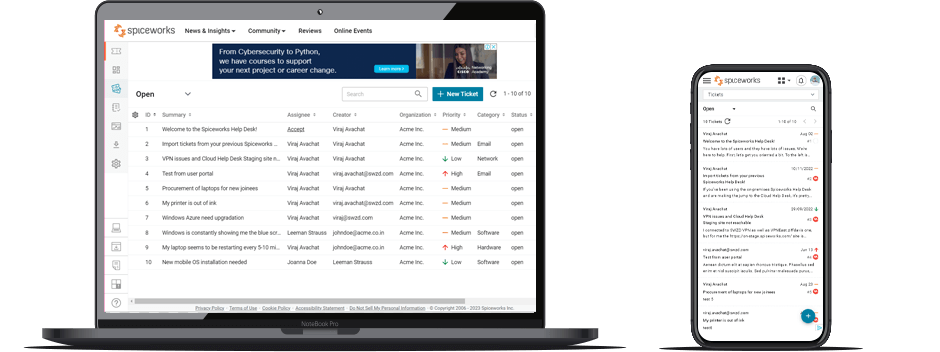
Spiceworks is free. Fully free, not "free tier with aggressive upsell." It's ad-supported, which is worth knowing, but for small IT teams with constrained budgets, it delivers core help desk functionality at zero cost.
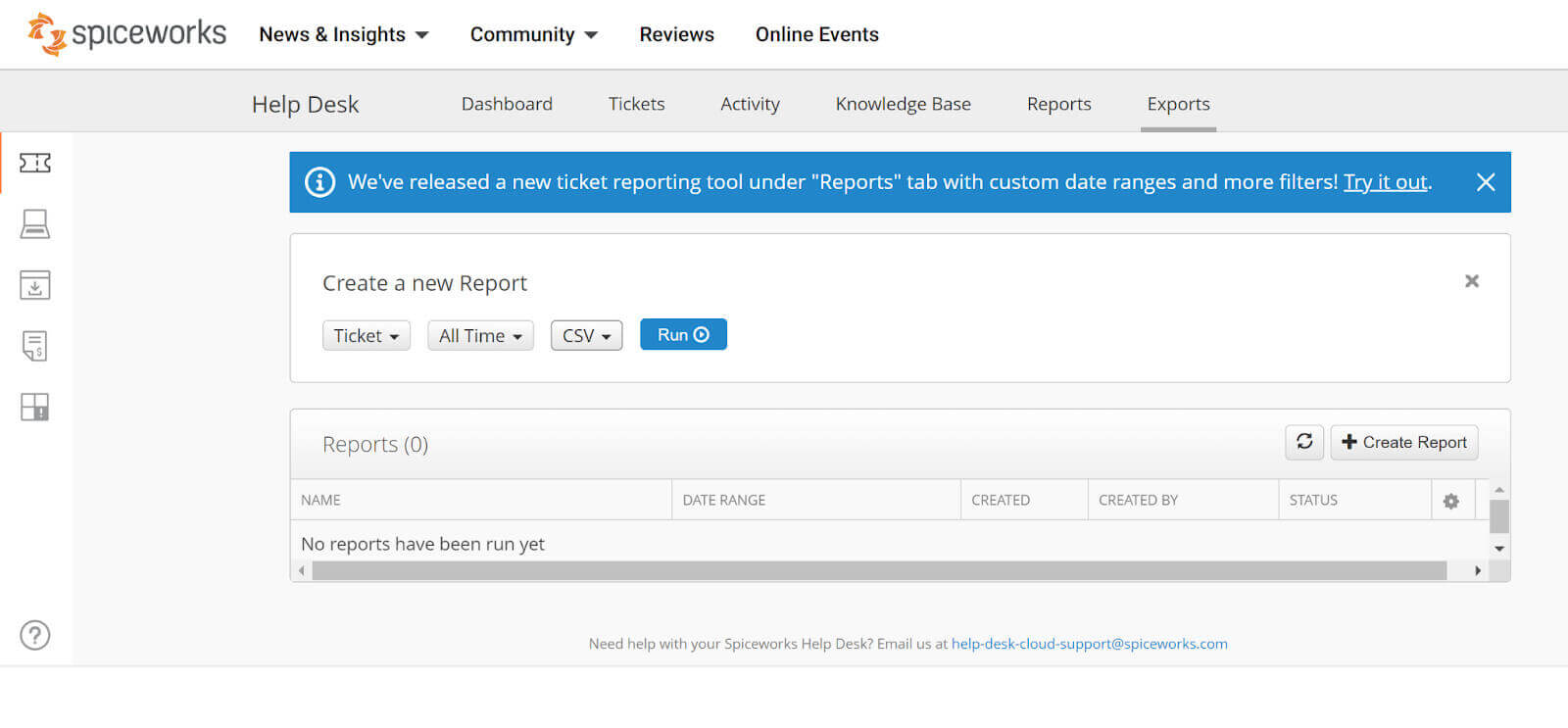
What it does well: Ticket management, basic asset tracking, a knowledge base, and a large active community forum that's often a faster route to answers than vendor support.
Source: Spiceworks
Unique features:
- Ad-supported free model with no agent limits
- Active community forum with peer-to-peer support
- Network monitoring (self-hosted version)
Source: Spiceworks
Pros:
- Completely free
- Quick setup with no technical expertise required
- Large, active community for peer support
Cons:
- Ads in the interface
- Feature depth doesn't compete with paid platforms
- The cloud version has reduced functionality compared to the self-hosted version
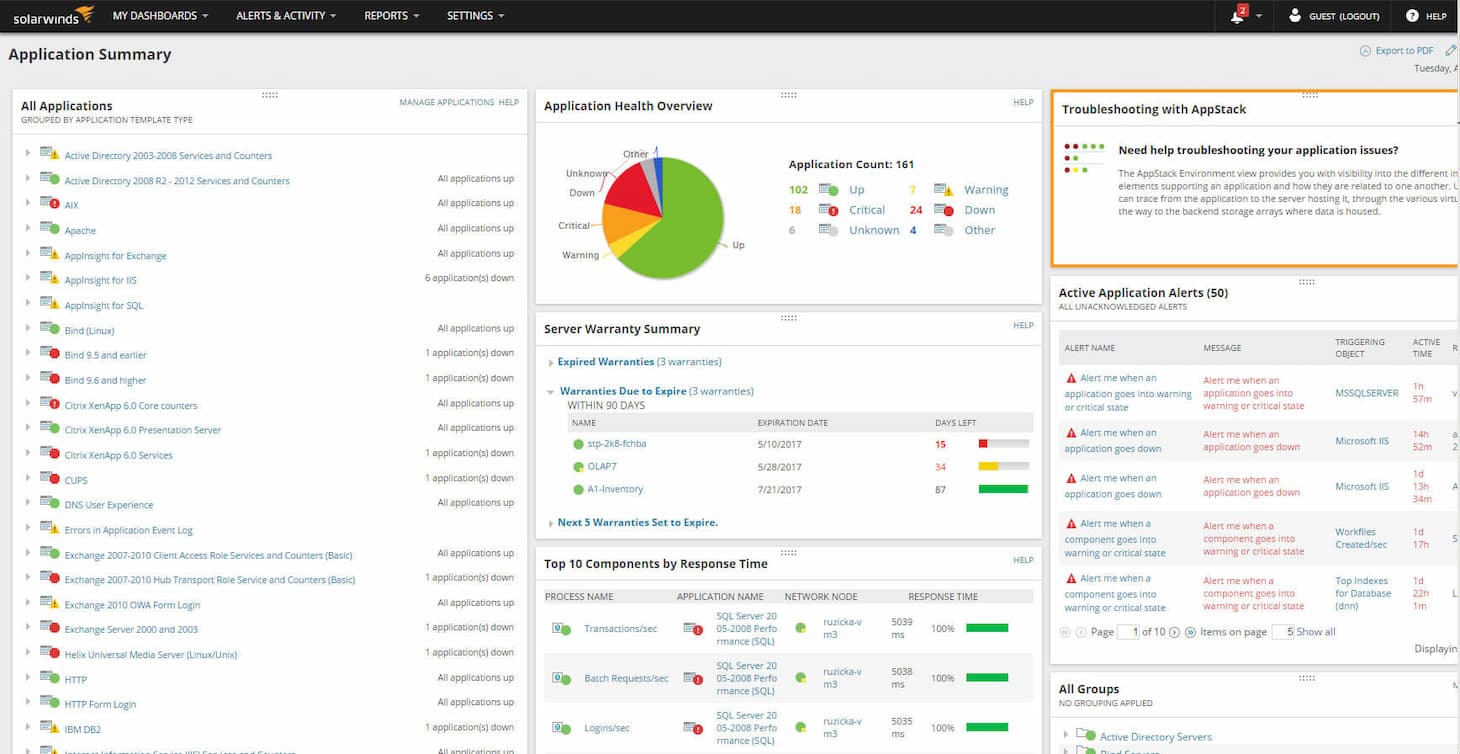
- Reporting is basic
Source: Spiceworks
Pricing: Free.
Bottom line: The right call for very small IT teams, MSPs doing triage, or any environment where budget is the primary constraint. Don't use it if you need ITIL compliance, advanced asset management, or serious reporting.
Migration paths from Jira Service Management
Getting out of Jira Service Collection is straightforward in principle and complicated in practice. Here's what to expect.
What migrates cleanly: incidents, changes, problems, user records, Confluence data, tags, inline images, comments, and attachment files transfer well with most automated migration tools, including Help Desk Migration and APIs. Jira's REST API is well documented, and most competing platforms offer built-in import features specifically for Jira data.
What requires manual work: Workflow automations, SLA configurations, and custom field mappings don't transfer automatically. You'll rebuild these in the new ITSM platform. Budget time for it.
What you'll lose: Jira-specific features like JQL-based filters, Atlassian-native integrations, and any customizations built on Jira's plugin ecosystem don't have direct equivalents. Identify these dependencies before you commit to a migration.
Help Desk Migration supports all the Jira Service Management competitors mentioned above, as well as others. Our service can handle the bulk data transfer and reduce the risk of record loss during cutover. A Free Demo Migration — moving a sample dataset — is the right way to validate the process before committing to the Full Migration.
Here is a recommended Jira migration checklist:
- Export and audit your current Jira data.
- Decide on the date and inform your team.
- Prepare your new ITSM platform for the migration.
- Run a Demomigration to the target platform.
- Validate ticket integrity and user assignments.
- Rebuild automations and SLA rules in the new system.
- Run in parallel for 2 to 4 weeks if volume is high.
- Cut over and disable your Jira platform.
How to plan the switch from Jira Service Collection
Changing ITSM platforms affects everyone who files a ticket and who resolves one. A clean transition requires more than picking the right software.
Step 1: Decide what you need before looking at tools. Write down your current processes, integrations, and reporting needs. Identify which features are must-haves and which are optional. Teams that skip this step face the same problems in the new system.
Step 2: Get input from technicians, not just managers. Daily users know where the current tool falls short. Their feedback prevents trading one set of frustrations for another.
Step 3: Map your integrations. List every third-party app connected to Jira Service Collection: monitoring tools, communication platforms, CI/CD pipelines, and identity providers. Confirm your target ITSM platform supports those integrations natively or with equivalents.
Step 4: Plan for the full pricing, not just license fees. Include setup time, training, consultant costs for complex help desk migration, and lost productivity during the switch. An ITSM system at $20 per agent per month is cheaper, but switching might take 3 months and not save money in the first year.
Step 5: Choose a launch date and plan backward. Without deadlines, data migration can take a long time. A set date drives decisions and keeps everyone aligned.
What Jira Service Management alternative is the best?
The right Jira Service Management alternative depends on your team's size, compliance requirements, and the specific ways Jira is failing you. Most teams find that a focused evaluation — shortlisting two or three options, running a trial migration, and involving your technicians — produces a clear answer within a few weeks.
Switch from Jira Service Management to Freshservice, ServiceNow, Zendesk, or any major help desk with a free demo migration. You'll see exactly how your ticket data transfers before committing to anything.
Frequently asked questions
- Steep learning curve. Jira isn’t beginner-friendly and often requires technical experience to use effectively.
- Complex interface. The UI can feel clunky and unintuitive, especially for newcomers.
- Complicated IT Asset Manager setup. Despite its flexibility, configuring Jira’s IT Asset Manager is time-consuming and demands CMDB expertise to create schemas, attributes, and automations manually.
- High and growing costs. Pricing increases rapidly as teams scale, since Jira charges per agent and feature. Many startups choose cheaper tools like HaloITSM or ManageEngine instead.
- Paywalled features. The free plan is limited — essential tools like IT Asset Management, virtual agents, and incident tracking are only in higher tiers.
- Limited integrations. Jira connects smoothly with Atlassian tools but struggles with third-party ecosystems like Google Workspace or Microsoft 365, often requiring extra apps or scripts.
- Standard option: the starting price is around $13 per technician/per month.
- Professional option: $27 per technician/per month.
- Enterprise option: starts from $67 per technician/per month.
- Starter option: $19 per agent/month (billed annually).
- Growth option: $49 per agent/month (billed annually).
- Pro option: $99 per agent/month (billed annually).
- Knotty set up and configuration. A previous technical background is required to figure out all the details of workflow management and customization putting up.
- Poor handling of non-standard requests. Many out-of-the-box ITIL have to be built manually.
- Analytics & reporting gaps. The tools meant for reporting and analytics management are quite modest compared to targeted enterprise ITSM platforms.
- Limited integration options. Extra plugins are needed for non-Atlassian integrations.
- High probability of cost escalations. The pricing model gets more expensive as your requests increase.
- Poor self-service prospects. The customer portal provides only a limited number of solutions.
Pricing is the most common trigger — costs compound fast as you add agents and Marketplace apps. Complexity is the second: configuring asset management and automations requires specialist knowledge that most teams don't have in-house. At scale, both problems get worse simultaneously.
It depends on your size. ServiceNow matches Jira's enterprise depth and adds more. Freshservice covers the same core ITSM workflows with less configuration overhead. HaloITSM is the closest match for teams running strict ITIL processes who don't need enterprise scale.
Yes. Automated migration handles projects, tickets, comments, attachments, custom fields, and user records. Most platforms have dedicated Jira import utilities. The data transfer itself is the easy part — workflow automations and SLA rules need to be rebuilt manually in the new system.
Pricing scales with record volume — the more tickets and attachments, the higher the cost. Most mid-size migrations are quoted upfront with no surprises. Running a free demo migration first gives you an accurate record count and a clear cost estimate before you commit.
Small instances with a few thousand tickets can be completed in a few hours. Larger enterprise migrations — including planning, testing, and parallel running — typically take one to two weeks. The data transfer itself is fast; rebuilding automations and validating the output takes the most time.