
Here is a scenario that happens more than it should: a team migrates to Freshdesk, enables Freddy AI on day one, and immediately notices the bot giving wrong answers, missing context, or hallucinating policy details that changed six months ago. The platform gets blamed. Freddy gets disabled. The team reverts to manual support.
The platform is not the problem. The knowledge base is.
Freshdesk's AI Agent learns directly from your solution articles, custom Q&As, uploaded files, and URLs. Its accuracy is a direct function of the quality, structure, and recency of that content. Migrate a poorly structured, outdated, or incompletely translated knowledge base into Freshdesk, and Freddy starts with a handicap it may never recover from.
This guide is for teams migrating to Freshdesk — whether from Zendesk, Intercom, ServiceNow, or another platform — who want Freddy AI to deliver accurate answers from the first day of go-live. You will get the step-by-step migration process, the pre-migration cleanup checklist, the article structure rules that Freddy relies on, and the post-migration validation framework to confirm accuracy before you go live.
1. Why Freddy AI accuracy depends on your knowledge base
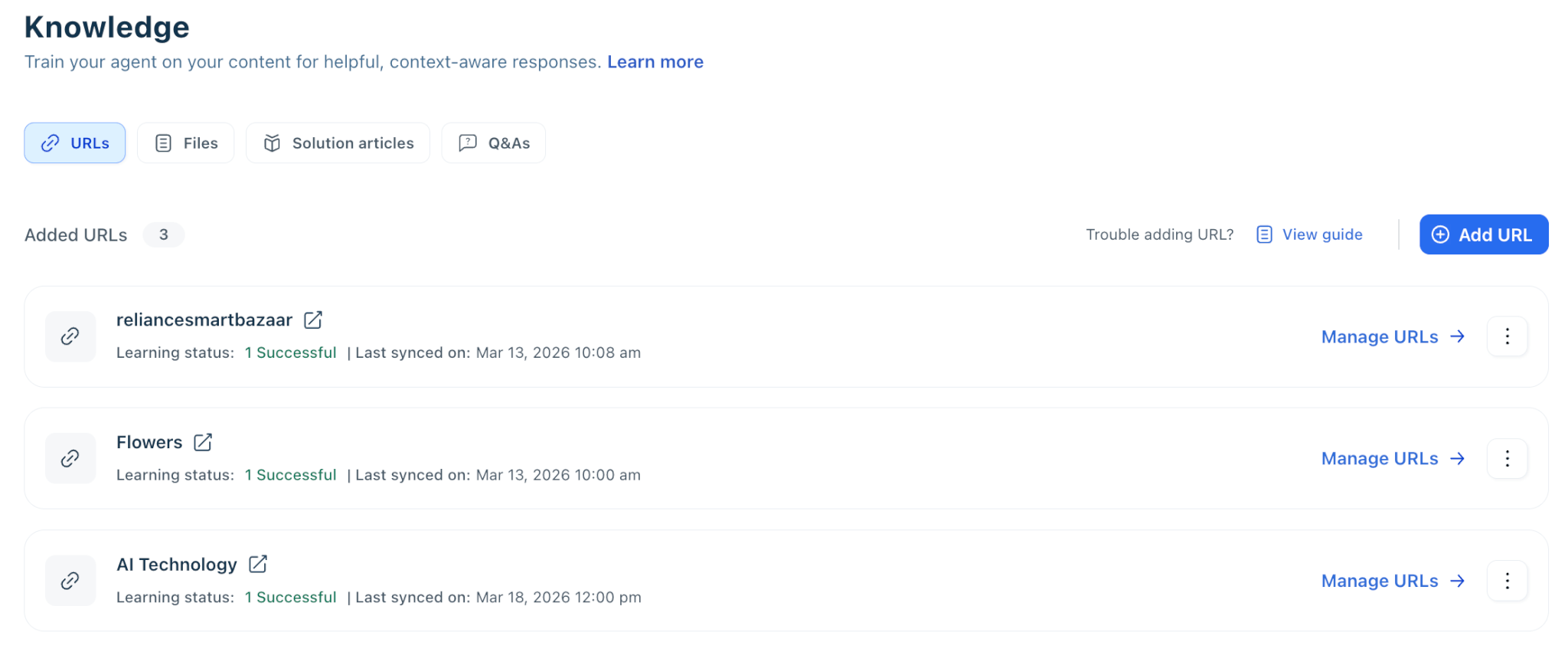
Freshdesk's AI — Freddy — operates through AI Agent Studio. When you create an AI agent, you connect it to knowledge sources: solution articles, uploaded files, public URLs, and custom Q&A pairs. The AI agent then learns from those sources to generate answers to customer queries.
There is no black box here. Freddy does not read your ticket history, your email threads, or your internal documents unless you explicitly point it to them. Its entire response quality rests on what you feed it. This has one critical implication for teams migrating to Freshdesk:
Teams that enable Freddy before completing KB cleanup typically see two failure modes: (1) hallucinated answers — Freddy confidently references policies or procedures that no longer exist in your updated knowledge base, because the old version was migrated, and (2) zero-confidence deflection — Freddy says 'I don't have information on that' for questions your KB genuinely covers, because article titles don't match the natural language customers use.
What Freddy actually reads from your knowledge base
Freddy's AI Agent Studio supports four knowledge source types:
- Solution articles — your primary source. Freddy reads the article title, body content, and any attached tags. Article structure and heading hierarchy directly affect how Freddy interprets topic boundaries.
- Custom Q&As — explicit question-answer pairs you define. These are the highest-confidence source: Freddy treats them as authoritative overrides.
- Files — PDFs, Word documents. Useful for policy documents and technical specs, but less structured than articles.
- URLs — public web pages. Useful for product documentation hosted outside Freshdesk.
For a migrated knowledge base, solution articles are the dominant source. The article quality, category structure, and language coverage you migrate in directly determines what Freddy can and cannot answer accurately.
2. The AI-ready KB migration — step by step
Migrating a knowledge base to Freshdesk is a six-step process. Steps 1 through 4 happen before you run the migration. Steps 5 and 6 happen after.
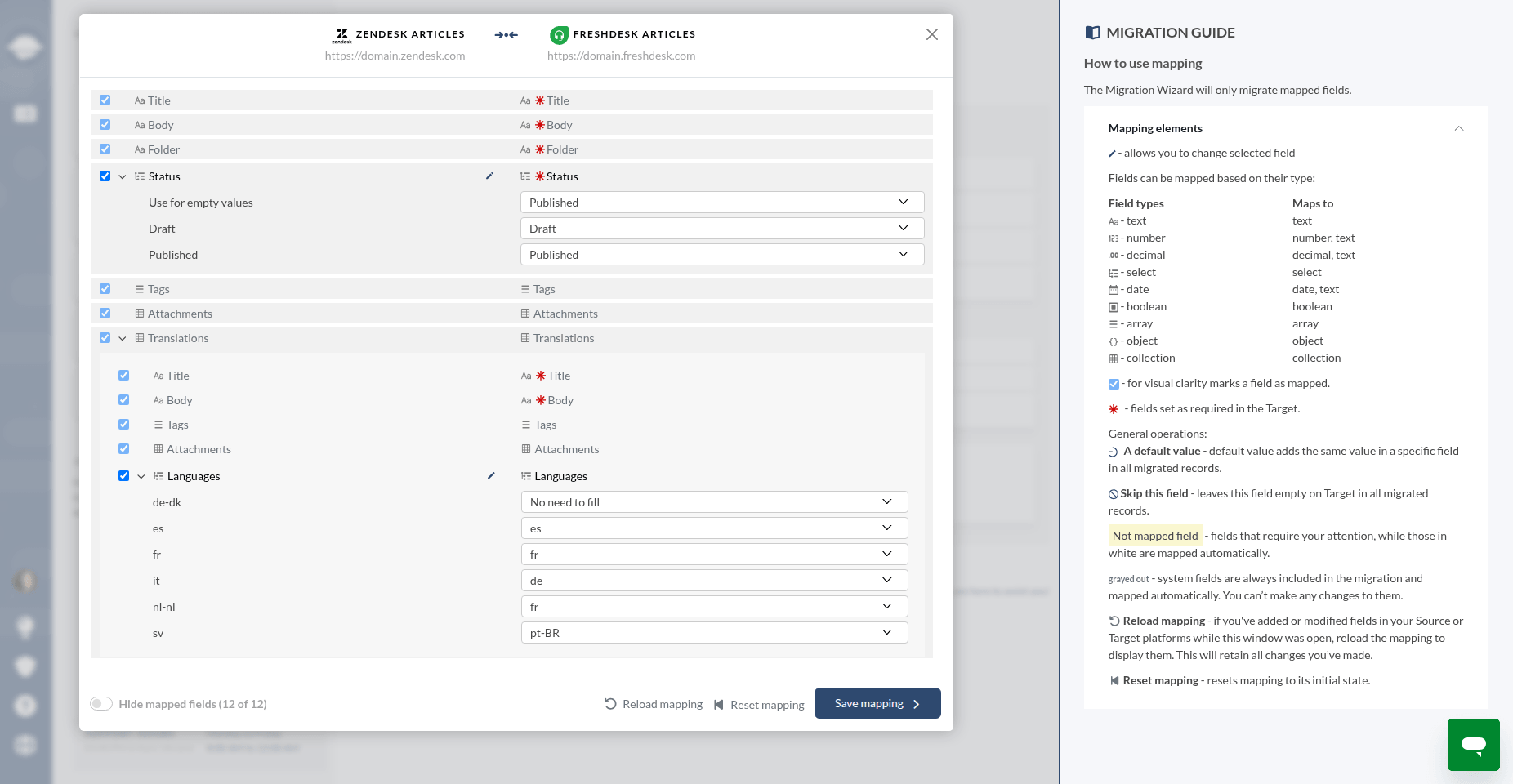
This section covers knowledge base migration specifically — articles, categories, folders, and language versions. It does not cover ticket migration, contact migration, or agent setup. If you are running a complete or express migration alongside your KB migration, follow the sequence in the Complete Migration Guide or Express Migration Guide. Your KB should migrate before tickets, and before Freddy AI is enabled.
Step 1 — Audit your existing knowledge base
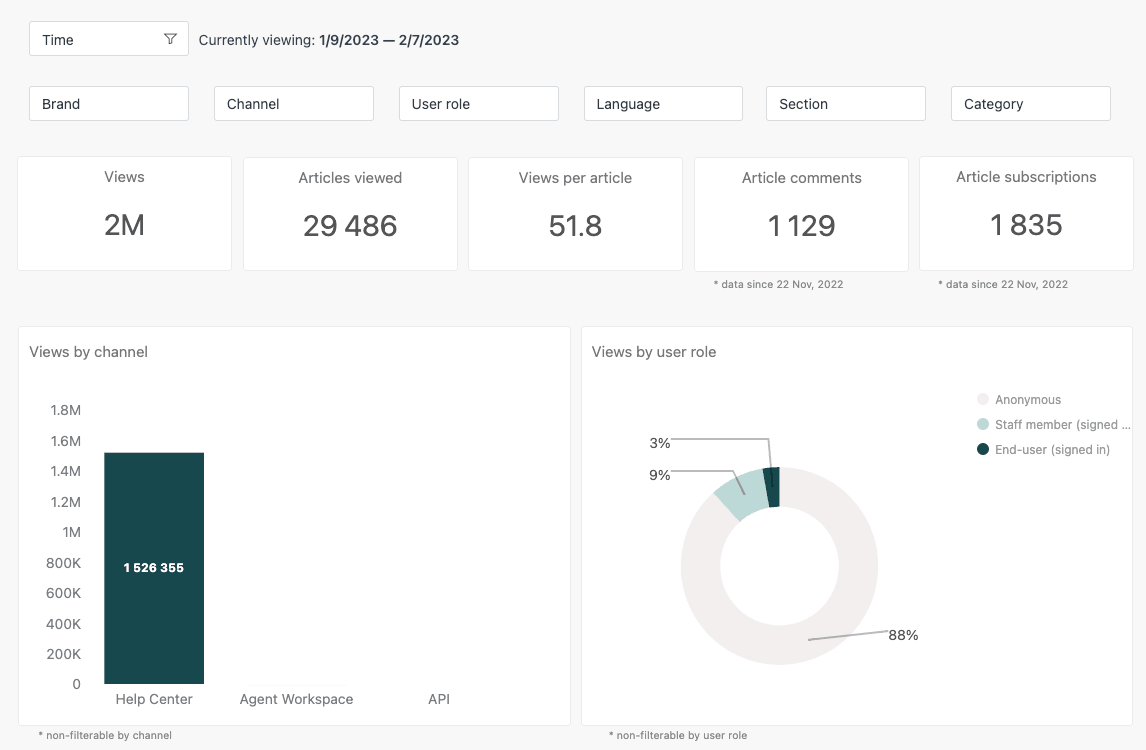
Before migrating anything, generate a complete inventory of your current knowledge base. You need to know:
- Total article count by status (published, draft, archived)
- Category and folder structure — how many levels deep
- Language versions — which articles exist in which languages
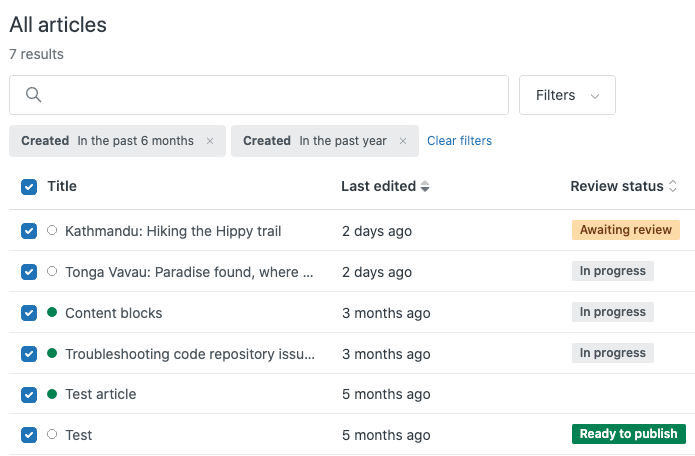
- Last-modified dates — how many articles have not been updated in 12+ months
- Article performance data — views, helpfulness ratings, and CSAT where available
This inventory becomes your pre-migration cleanup list. Every article that has not been updated in 12 months is a candidate for review before migration. Every article with a low helpfulness rating is a candidate for rewrite or removal. Every article that exists in English but not in other supported languages is a gap you need to close before Freddy can serve non-English customers accurately.
Step 2 — Clean before you migrate
This is the step most teams skip and the step that causes the most post-migration AI accuracy problems. Cleaning your knowledge base before migrating has three components:
2a. Remove outdated and low-quality articles
Any article that no longer reflects your current product, policies, or procedures should be removed or updated before migration. Migrating outdated articles into Freshdesk means Freddy learns from incorrect information. The fix is expensive post-migration: you must identify which articles Freddy is drawing from, update or remove them, and wait for Freddy to re-learn. Fixing it before migration takes minutes per article.
2b. Standardize article titles for AI intent matching
Freddy matches customer queries to articles partly through title analysis. Article titles that use internal jargon instead of customer language ('Subscription tier migration FAQ' instead of 'How do I change my plan?') cause Freddy to miss matches on natural-language queries. Rewrite titles to match how customers ask questions, not how your team describes features.
2c. Consolidate duplicate and overlapping articles
Multiple articles covering the same topic with slightly different scopes confuse Freddy's intent classification. Merge them into a single authoritative article with a clear title, structured headings, and a direct-answer first paragraph. Freddy performs best on articles that are specific, current, and self-contained.
Step 3 — Plan your category and folder structure for Freddy
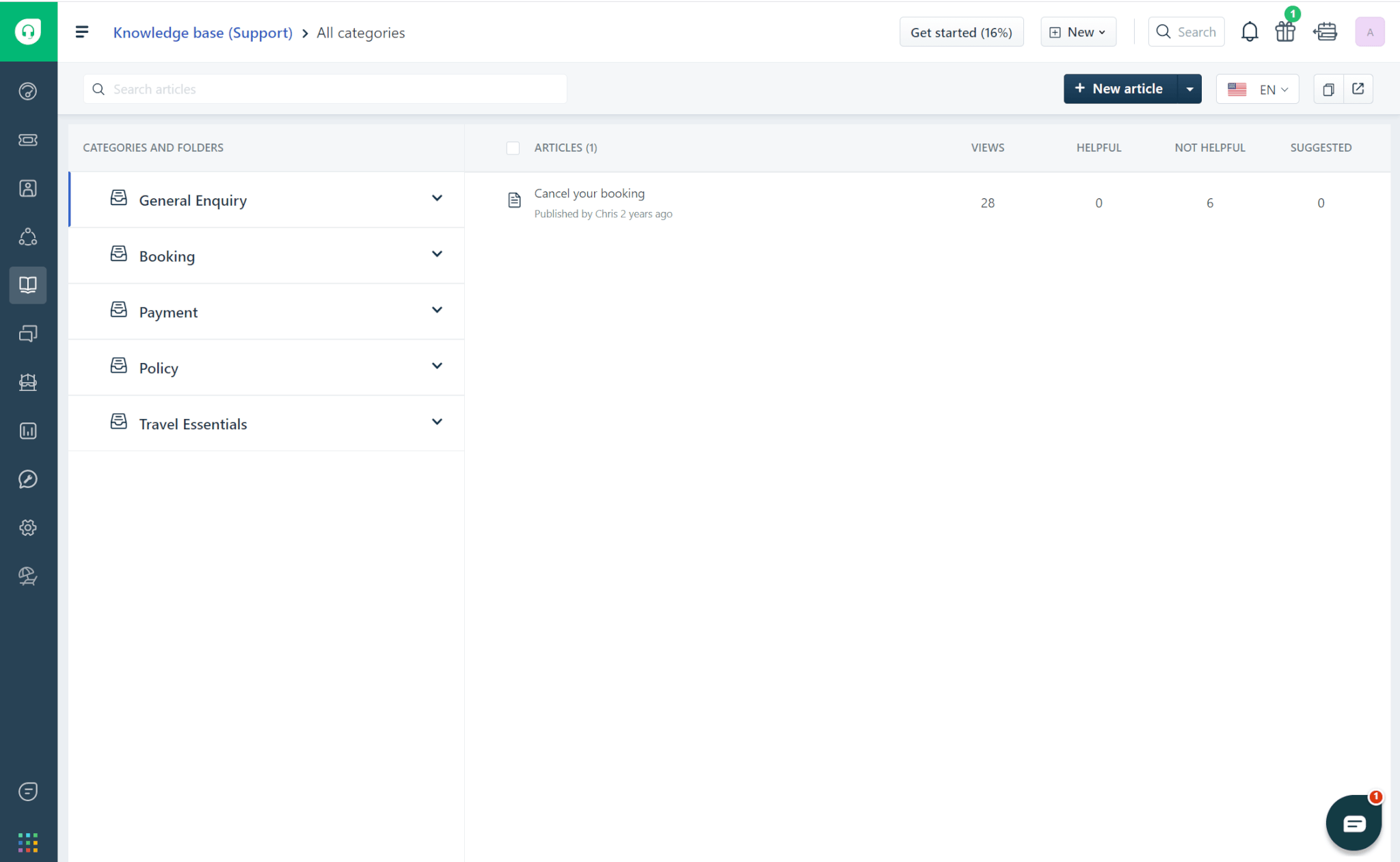
Freshdesk organises knowledge base content in three levels: categories, folders, and articles. Freddy uses this hierarchy to understand topic scope. A well-designed hierarchy improves Freddy's ability to return contextually relevant answers. A flat or overly complex hierarchy degrades it.
The recommended structure for AI accuracy:
- Categories: broad topic areas that match your product's main use cases (e.g. Billing, Account Management, Technical Troubleshooting, Getting Started)
- Folders: specific sub-topics within each category (e.g. under Billing: Invoices, Plan Changes, Refunds, Payment Methods)
- Articles: single-topic, direct-answer content within each folder — one problem, one article
Avoid: categories that mix unrelated topics, folders with more than 15 articles, articles that cover multiple unrelated problems. Each signals to Freddy that topic boundaries are unclear.
Avoid: categories that mix unrelated topics, folders with more than 15 articles, articles that cover multiple unrelated problems. Each signals to Freddy that topic boundaries are unclear.
Step 5 — Run the migration and verify structure
When your source KB is clean and your Freshdesk category structure is planned, run the migration. The connects your source platform, maps categories and folders to their Freshdesk equivalents, and transfers articles with their metadata, attachments, and translations intact.
After the migration completes, before enabling Freddy, verify:
- Article count in Freshdesk matches source platform count (per language version)
- Category and folder structure recreated correctly — check nested folders
- Internal article cross-links are functional (update any hardcoded source platform URLs)
- Embedded images and attachments render and download correctly
- Draft articles remain in draft status (not accidentally published to customers)
Step 6 — Enable Freddy AI and validate accuracy before go-live
Enable Freddy only after KB structure verification is complete. In AI Agent Studio, connect your Freshdesk solution articles as the primary knowledge source. Do not enable the AI agent for live customer interactions yet.
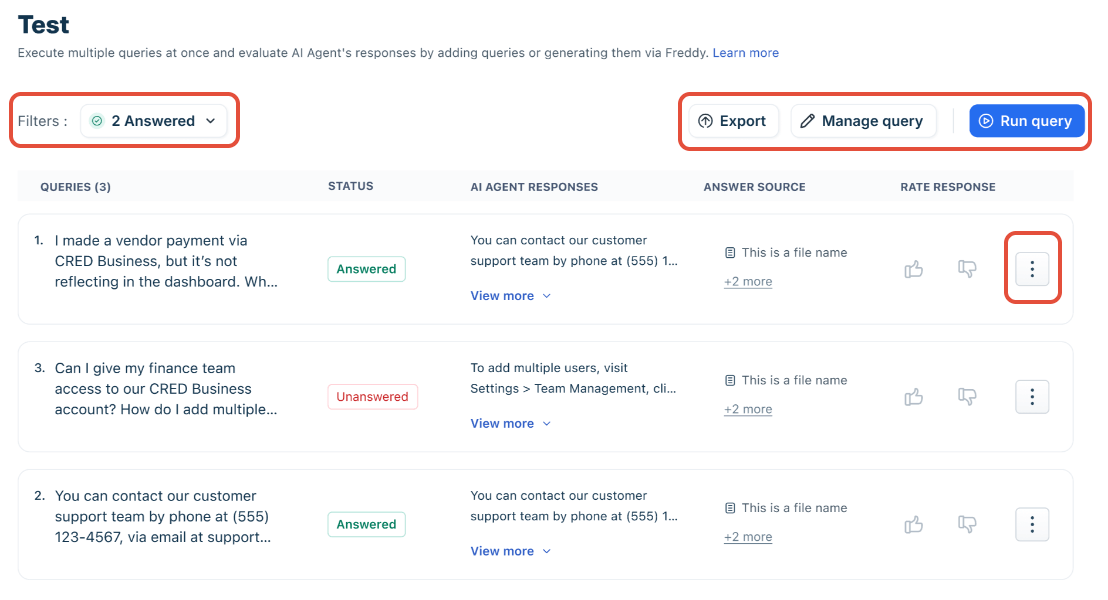
The 20-query validation test
Before go-live, run 20 queries against Freddy that represent your highest-volume ticket categories. Use the natural language your customers actually use — not internal terminology. For each query, check:
- Did Freddy return a relevant article? (not a generic fallback)
- Is the answer accurate and current (not based on an outdated article that should have been removed)?
- Is the confidence level appropriate — not overconfident on edge cases?
- For multilingual queries: does Freddy return the correct language version?
A score of 17 out of 20 or higher (85% accuracy) is the recommended threshold before enabling Freddy for live customers. If accuracy is below 85%, return to the article structure and title review in Step 2 before going live.
3. Writing articles Freddy can use — structure rules
The migration process handles the transfer. Article structure determines what Freddy does with the content after transfer. These are the five article-structure rules that have the highest impact on Freddy accuracy.
Rule 1: Answer the question in the first paragraph
Freddy extracts answers from articles for featured-snippet-style responses. Articles that open with context or background before the answer cause Freddy to return incomplete or off-topic snippets. Structure every article as: direct answer first (40–60 words), then explanation, then additional detail. This format also improves search snippet eligibility in Google.
Rule 2: One article, one topic
Articles that cover multiple problems force Freddy to choose which part of the content is relevant to a given query. It often chooses incorrectly. Split any article covering more than one distinct problem or procedure into separate articles. The resulting articles will be shorter, clearer, and more reliably matched by Freddy.
Rule 3: Use customer language in titles and headings
Freddy matches queries to articles using title and heading analysis. 'Password reset' matches a query about forgetting a password. 'Credential recovery workflow' does not. Audit every article title and H2 heading against how customers actually phrase support requests. Your ticket history is the best source for this language — search your most common ticket subjects.
Rule 4: Include explicit steps for procedural content
For how-to articles, number your steps explicitly. Freddy recognizes numbered step sequences and can reference them in multi-turn conversations ('In step 3, you'll need to...') — a capability that only works if the steps are explicitly numbered, not described in paragraph form.
Rule 5: Tag articles with topic keywords
Freshdesk allows you to add tags to solution articles. These tags supplement Freddy's topic classification. Use 3–5 tags per article that reflect the topic, product area, and common customer query terms. Do not use tags redundantly — if the tag is already in the article title, it adds no value.
4. Pre-migration KB cleanup checklist
Run this checklist against your knowledge base before starting the migration. Every item not completed before migration must be completed in Freshdesk after migration — which is slower, riskier, and means Freddy is degraded until it is done.
- Remove or archive articles not updated in 12+ months that no longer reflect current product or policy
- Rewrite article titles to use customer language (match your top 20 ticket subject lines)
- Consolidate duplicate articles covering the same topic into single authoritative articles
- Verify all language versions are present for articles in your primary language — translate gaps before migrating
- Standardize category names to match your product's main topic areas (3–5 categories maximum for most teams)
- Confirm no more than 15 articles per folder (split oversized folders before migrating)
- Remove embedded links to the source platform's KB — these will break post-migration
- Export article view and helpfulness data — use it to prioritize cleanup on high-traffic articles first
- Mark truly outdated articles as 'archived' in the source rather than deleting — The Help Desk Migration tool migrates only published and draft articles by default
- Run a 20-query test against your source KB to establish a baseline accuracy score before migration
5. When professional services is the right call
Most teams can run a self-serve KB migration using the Help Desk Migration wizard. Three scenarios indicate professional services will deliver better outcomes:
Large or complex knowledge bases
If your knowledge base contains more than 500 articles across multiple languages, professional services manages the cleanup, structure planning, and migration sequencing end to end. This is particularly valuable when the source platform has a non-standard category structure that needs to be re-architected for Freshdesk's three-level hierarchy before migration.
Migration alongside ticket and contact migration
If you are running a complete or express migration — moving tickets, contacts, companies, and KB articles simultaneously — professional services coordinates the sequencing. KB articles should migrate and be verified before Freddy is enabled, and before ticket migration begins. Getting the sequence right requires planning that is difficult to manage in parallel with a live support operation.
Freddy setup and training beyond basic configuration
Setting up Freddy with custom Q&A pairs, multiple knowledge source types, workflow automations, and channel deployment (WhatsApp, web chat, Facebook) is a professional services engagement, not a self-serve setup. If your AI agent requirements go beyond connecting solution articles to the default Freddy configuration, our professional services team scopes and implements the full setup.
Start with a !
Before committing to a full KB migration, run a free demo. The demo migrates 20 articles and 20 tickets (if applicable) to your Freshdesk account, showing you exactly how your category structure transfers, how multilingual articles map, and whether any field or formatting issues need to be resolved before the full run. Most teams identify at least one structural issue in the demo that saves significant time post-migration.
Conclusion: KB quality first, Freddy accuracy second
Freddy AI does not make your knowledge base better. Your knowledge base makes Freddy better. The sequence matters: audit, clean, structure, migrate, verify, validate — in that order. Teams that enable Freddy on a migrated-but-uncleaned knowledge base spend weeks debugging AI accuracy that should never have been degraded in the first place.
The good news: the pre-migration cleanup process described in this guide serves double duty. Articles restructured for Freddy accuracy also rank better in Google search. Titles rewritten to match customer language improve both Freddy intent matching and organic search click-through rates. You are not doing extra work — you are doing the work once, correctly.
If you are migrating to Freshdesk and want your knowledge base and Freddy AI set up correctly from day one, start with a free demo migration. It takes five minutes and shows you exactly how your article structure transfers to Freshdesk before you commit to the full migration.
Next steps
Run your — see how your KB articles transfer to Freshdesk before committing: help-desk-migration.com/demo
Talk to our professional services team about KB migration + Freddy setup
Read the AI-first migration guide — for teams switching to an AI-powered helpdesk and needing the full data quality framework
Frequently asked questions
For most knowledge bases under 500 articles, the migration completes within a few hours. Larger knowledge bases with multiple language versions and complex folder structures may take 6–12 hours. Run a free demo migration first — it completes in under 5 minutes and gives you an accurate estimate for your specific article count and structure.
Freddy does not enable automatically after migration. After your KB articles are in Freshdesk, you connect them as a knowledge source in AI Agent Studio, configure your AI agent, and run the 20-query validation test before enabling Freddy for live customers. Plan for 2–4 hours of Freddy configuration time after KB migration is complete.
Yes — Help Desk Migration preserves article formatting including headings, numbered lists, bullet points, tables, and inline images. Embedded images transfer with the article. Internal links that reference your source platform's KB URLs will need to be updated to the new Freshdesk URLs post-migration. Run the internal link check in Step 5 of this guide immediately after migration.
Help Desk Migration supports KB migration from 100+ platforms including Zendesk, Intercom, ServiceNow, Jira Service Management, HubSpot, and others. Run a free demo to confirm your specific source-to-Freshdesk pair is supported and to preview how your article structure maps before committing to the full migration.
Draft articles migrate as drafts — they are not published automatically in Freshdesk. Published articles migrate as published. Archived articles are not migrated by default. Review your draft article list before migration: drafts that are outdated should be removed from the source rather than migrated, as they count toward your article total and may appear in AI Agent Studio's knowledge source list.
Help Desk Migration migrates all language versions simultaneously in a single run. You do not need separate migration passes per language. Before migrating, verify in your source platform that translated versions of articles are in published or draft status — language versions in a 'pending translation' status may not export via API and should be completed before migration starts.
A well-structured, cleaned knowledge base migration improves Freddy accuracy. A poorly structured or uncleaned migration degrades it. The six-step process in this guide — audit, clean, structure, migrate, verify, validate — is designed specifically to ensure Freddy accuracy improves at migration, not after weeks of post-migration cleanup.
Solution articles are Freshdesk's term for published knowledge base articles visible to customers and agents. Freddy knowledge sources are the content types Freddy AI learns from — which include solution articles, but also custom Q&As, files, and URLs. When you enable Freddy AI, you connect your solution articles as one of its knowledge sources. The article quality and structure rules in this guide apply to solution articles specifically.