Oracle Service Cloud Migration Services: Fast, Reliable, Auditable
Support data migrations don’t have to be painful. Help Desk Migration transfers your Oracle Service Cloud (formerly RightNow) tickets, contacts, and knowledge base articles in one consistent process.
There’s no downtime and no vendor lock-in. Relationships between tickets, contacts, and articles stay intact. Because the migration runs at the application layer—not through raw database exports—your workflows continue to work and your historical data stays usable.
See how your real data moves before committing to anything.
No credit card required Fast setup
Interactive Migration Calculator
Adjust sliders to estimate your migration time and cost savings
Estimates based on 60,000+ successful migrations. Actual results may vary.
What Data Can Be Migrated from Oracle Service Cloud?
During an Oracle Service Cloud data migration, Help Desk Migration transfers all core data while preserving structure and history.
This includes:
Incidents (tickets)
Requesters, companies, assignee groups, attachments, comments, custom fields, and created, updated, and closed timestamps all migrate together.
Contacts and organizations
Relationships remain intact, so contacts stay linked to the correct organizations and tickets.
Knowledge base articles
Articles, attachments, and inline images migrate without breaking hierarchy, even in large knowledge bases with 30,000+ articles.
Staff records
Agents, roles, and group assignments carry over, preserving ownership and workflow logic.
Attachments and inline images
Files stay connected to their original tickets and articles.
Custom fields and enumerations
Metadata and custom configurations migrate exactly as defined.
As a result, your new help desk mirrors your current system: no missing history, no broken links, no lost context.
User & Role Migration
Agents migrate with their roles, permissions, and activity history. Ticket ownership, knowledge base authorship, and workflow assignments remain unchanged.
Role and group mappings are aligned to the target system’s permission model during field mapping.
Complete Ticket Migration
All Oracle Service Cloud incidents migrate with their full data set:
- Requester and company: customer and account information
- Assignee and group: ownership and routing logic
- Attachments and inline images: files remain linked
- Public and private comments: full conversation history
- Custom fields: source metadata
- Created, updated, and closed dates: lifecycle timestamps
Migrated incidents preserve their original structure and continue to support existing workflows.
Preserve Linked Relationships
During the Oracle Service Cloud contacts migration, they move with all core details, including phone numbers and organizational links.
Each contact remains connected to its related incidents and organizations. Relationships between contacts, accounts, and support interactions are preserved for reporting and workflow continuity.
Maintain KB Structure and Attachments
Oracle Service Cloud knowledge base migration includes inline images and file attachments. Categories, subcategories, and hierarchical relationships remain unchanged.
Large knowledge bases (30,000+ articles) are processed in batches with mapped categories to prevent hierarchy flattening or content loss. The target system reproduces the original KB layout without data loss or structural changes.
Accounts Migration
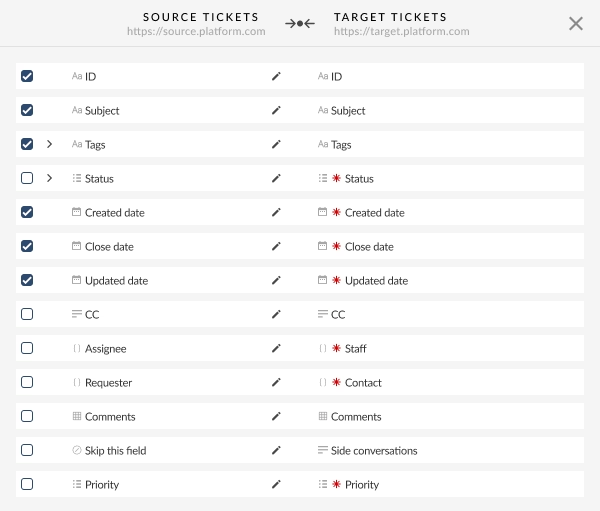
With Help Desk Migration, you can map the Accounts from Oracle Service Cloud to agents in your target platform and vice versa to control how tickets are assigned after migration. You can map multiple agents to a single one.
Deleted and inactive accounts
You can reassign tickets from deleted or inactive Accounts to active agents on the target platform.
Organization Fields:
- Name
Contact Fields:
- Name
- Phone
Incident Fields:
- Subject
- Contact
- Company
- Group
- Assignee
- Created date
- Updated date
- Closed date
-
- Comment author
- Comment privacy
- Comment publicity
- Comment body
- Comment attachments
- Comment recording
- Comment created date
-
- String custom fields
- Boolean custom fields
- Dates custom fields
- Number custom fields
- Select custom fields
- Multi-select custom fields
Collection Fields:
- Name
- Description
Sub-collection Fields:
- Name
- Category
- Parent
Article Fields:
- Title
- Body
- Author
- Folder
- Attachments
Oracle Service Cloud Migration Options: Control What Moves and How
Help Desk Migration lets you configure what data migrates and how it is processed.
Options include:
- Tag tickets: add labels for easier organization in the target system.
- Skip attachments: migrate only essential records to reduce transfer time.
- Migrate attachments and inline images: preserve full ticket context.
- Migrate newest records first: move active support data before historical data.
- Select which tickets and articles (by ID) you want to migrate during the Demo.
These settings allow teams to adapt the migration to business needs while preserving data structure and usability.
Custom Demo Migration: Test Specific Data Subset
Run a custom demo on selected incidents or KB articles to validate how Oracle Service Cloud attachments migration in advance. This allows you to review attachments, formatting, and relationships without committing to a Full migration.
Inline Images and Attachments Migration Handling
Embedded images can be converted to file attachments to preserve ticket context while optimizing storage in the target system. All files remain linked to their original tickets and articles.
Oracle Service Cloud to Modern Platforms:
Move to the Help Desk That Works for You
How Oracle Service Cloud Migration Works
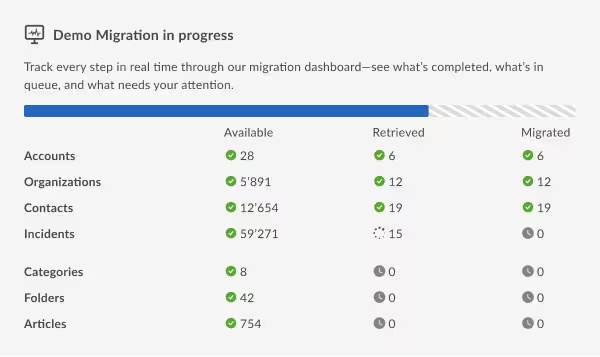
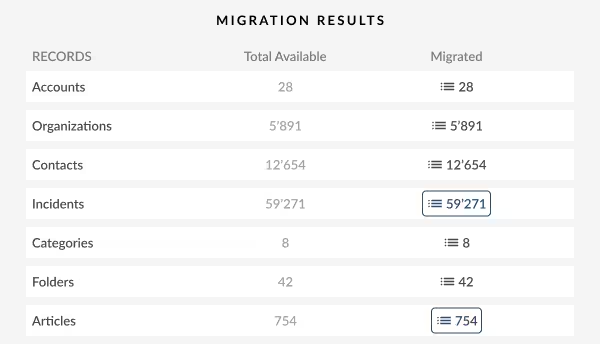
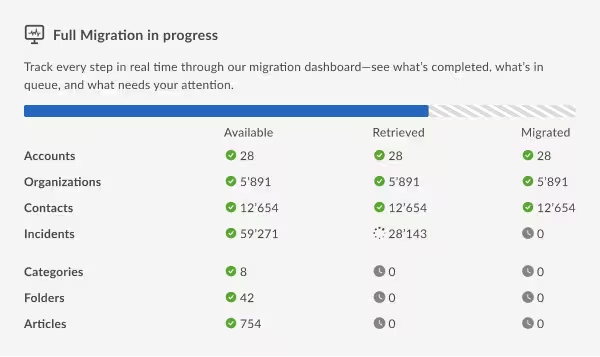
The Oracle Service Cloud migration process starts with a review of your current setup to identify dependencies and map all objects—from tickets and contacts to custom fields and KB articles. Run a Demo migration first to verify workflows, check data, and catch potential issues before the full migration.
Connect the source and target platforms
Map data fields
Demo Migration
Validate
Full Migration

Ready to Get Started?
Start with a Free Demo migration to see your incidents, contacts, and KB articles in the new platform.